

Welcome to Amanda's NICU Education



RNC-NIC Exam Prep & NICU Education for Nurses
I'm Amanda, a neonatal Clinical Nurse Specialist, NICU educator, and NICU nurse who's been caring for critically ill newborns since 2009.
I currently work as a Clinical Nurse Specialist in a Level IV NICU in Los Angeles, where I support neonatal nurses, providers, and families through education, evidence-based practice, and clinical expertise.
I created Amanda's NICU Ed to make high-quality NICU education more approachable and to help nurses feel more confident at the bedside and prepared for the RNC-NIC exam.
NICU Education for Nurses at Every Stage
Whether you're preparing for the RNC-NIC, starting your career in the NICU, or looking to strengthen your neonatal nursing knowledge, Amanda's NICU Ed provides practical, evidence-based education designed specifically for NICU nurses.

RNC-NIC Exam Prep
Prepare for the RNC-NIC with focused review materials, study resources, and practical test-taking strategies.

NICU Education
Build your knowledge and confidence with approachable education covering the concepts NICU nurses use every day.

NICU Resources
Find study guides, books, free resources, and educational content to support your growth as a neonatal nurse.

Not very many people love taking tests but as a self-acclaimed "forever student" who has taken (and passed) five different certification exams I am no longer afraid of tests! "Way to brag", you might be thinking but I want to help YOU pass your certification exam too!
Introducing Amanda's RNC-NIC Success digital course - your ultimate study companion!
Gain unlimited, on-demand access for life, ensuring you're primed to ace your certification exam.
I'm here to help you succeed and I can't wait for you to share with me that you PASSED the RNC-NIC EXAM!!!

Caring for ELBWs in the First 72 Hours
Caring for the ELBW Baby: Understanding the WHY Behind the First 72 Hours
What every NICU nurse should know about thermoregulation, fluids, glucose, respiratory support, and protecting the premature brain.
November is Prematurity Awareness Month, and I thought this would be the perfect opportunity to talk about some of our smallest patients in the NICU: extremely low birth weight (ELBW) babies.
If you've ever cared for a preemie born <28 weeks gestation you know just how much goes into those first few days of life.
We're watching their temperatures, adjusting their fluids, checking glucose and electrolytes, monitoring their respiratory status, protecting their skin, and trying to minimize handling while simultaneously doing approximately a million things.
And sometimes, especially when you're a newer NICU nurse, it can feel like you're just trying to remember everything you're supposed to do.
But here's what I want you to understand: Almost everything we do for these babies connects back to their physiology.
When you understand why an ELBW baby is at risk for hypothermia, why their sodium might suddenly increase, or why we're so careful about changes in carbon dioxide, those nursing interventions start to make a whole lot more sense.
So let's walk through some of the priorities during the first 72 hours of life, and more importantly, the WHY behind them.
This isn't meant to replace your unit's policies or your patient's individualized plan of care. Think of it as a refresher on the physiology and nursing considerations that make caring for these tiny babies so unique.
First, what makes ELBW babies so vulnerable?
An ELBW baby is defined as an infant born weighing less than 1,000 grams.
Many of these babies are also extremely preterm, born before 28 weeks of gestation, although birth weight and gestational age are two different classifications.
Think about everything that's still developing at 23 or 24 weeks.
Their skin is incredibly thin and doesn't provide the same protective barrier as a term baby's skin. Their kidneys are immature and have difficulty regulating water and electrolytes. They have very limited glycogen and fat stores, making glucose regulation challenging. Their lungs are underdeveloped and surfactant deficiency makes it difficult to maintain functional residual capacity.
And then there's their brain. The germinal matrix contains fragile blood vessels that are particularly vulnerable to changes in cerebral blood flow and pressure.
So when we're talking about caring for ELBW babies, we're really talking about supporting multiple immature organ systems while giving them time to develop. They’re literally finishing gestation under our care!
That's why the details matter.
It starts before the baby is even born
One of the most important things we can do for an extremely preterm baby happens before delivery.
Preparation.
If you know you're attending the delivery of a 24-weeker, that is not the time to discover that the polyethylene wrap is missing or the appropriate-sized mask isn't available.
The team briefing, equipment checks, role assignments, and preparation of the thermal environment are all part of resuscitation.
Before delivery, I want to know the gestational age, whether antenatal steroids and magnesium sulfate were administered, any relevant maternal or fetal risk factors, and the anticipated plan for resuscitation.
I also want everyone to know their role.
Who's managing the airway? Who's monitoring the heart rate? Who's responsible for thermoregulation? Who's documenting? Who's communicating with the family?
These may seem like small things, but having a shared plan reduces confusion when seconds matter.
Let's talk about deferred cord clamping
The 2025 AHA/AAP neonatal resuscitation guidelines recommend deferred cord clamping for at least 60 seconds in preterm infants who do not require immediate resuscitation.
Why?
Because placental transfusion supports the baby's transition to extrauterine life.
But here's an important distinction: intact cord milking is not recommended for infants born before 28 weeks because of concerns about severe intraventricular hemorrhage (IVH).
This is a great example of why gestational age matters when we're applying resuscitation recommendations.
Temperature management starts immediately
For an extremely preterm baby, we don't routinely dry them the way we would a term newborn. Instead, we place them into a polyethylene wrap or bag without drying their body, add a hat, and use our prepared thermal environment.
Why?
Because their skin allows an enormous amount of water and heat to escape.
And we'll come back to this, because temperature regulation doesn't stop being important once the baby gets to the NICU.
Ventilation is still the priority
Regardless of how premature the baby is, effective ventilation remains the most important intervention when resuscitation is needed.
We can increase the oxygen all we want, but if we're not effectively moving air into the lungs, we're not accomplishing what we need to.
This is why we're looking for an improving heart rate and effective chest movement. If the heart rate isn't increasing with positive-pressure ventilation, then we know our ventilation is not effective and we need to perform the appropriate corrective steps.
For spontaneously breathing preterm infants, early CPAP can help establish and maintain functional residual capacity while potentially avoiding unnecessary intubation.
Oxygen should be blended and titrated according to the current resuscitation guidelines and preductal saturation targets. Remember, we're trying to avoid both inadequate oxygenation and excessive oxygen exposure.
The Golden Hour: So much to do, so little time
Once the baby arrives in the NICU, the work is far from over.
During the Golden Hour, we're focused on stabilizing respiratory support, maintaining temperature, establishing vascular access, initiating glucose delivery, obtaining necessary labs, and assessing perfusion.
It's a lot.
But rather than thinking of these as individual tasks, I want you to think about what we're trying to prevent.
We're trying to prevent hypothermia, hypoglycemia, inadequate oxygenation and ventilation, and unnecessary physiologic instability.
We're also trying to protect the brain.
And that means being intentional about how we handle these babies.
Protecting the premature brain
One of the things that makes the extremely preterm brain so vulnerable is the germinal matrix. This area contains fragile, immature blood vessels that are susceptible to hemorrhage.
Cerebral autoregulation is also impaired, meaning changes in systemic blood pressure and cerebral blood flow can have a greater impact.
This is why many NICUs have IVH prevention bundles that emphasize things like neutral head positioning, gentle handling, avoiding unnecessary stimulation, and minimizing rapid physiologic changes.
But I want to highlight something that I think is especially important for us to understand.
Carbon dioxide affects cerebral blood flow.
When PaCO₂ decreases, cerebral blood vessels constrict. When PaCO₂ increases, cerebral blood vessels dilate. So significant or rapid changes in CO₂ can affect cerebral perfusion.
This is one reason we're cautious about excessive ventilation, especially after interventions such as surfactant administration, when lung compliance may improve rapidly.
It's also why we try to avoid unnecessary fluctuations in blood pressure, oxygenation, and ventilation.
Thermoregulation: Why these babies lose heat so easily
Let's talk about temperature.
Our goal is generally to maintain an axillary temperature between 36.5°C and 37.5°C.
That sounds simple enough, right?
But maintaining that temperature in a 600-gram baby is an entirely different challenge than maintaining it in a term newborn.
Here's why:
ELBW babies have very little subcutaneous fat, limited brown fat, a large surface area relative to their body weight, and an immature skin barrier.
All of these things make them particularly susceptible to heat loss.
Remember the four mechanisms of heat loss?
Evaporation: Heat is lost as moisture evaporates from the skin.
Convection: Heat transfers to cooler air moving around the baby.
Conduction: Heat transfers when the baby touches a cooler surface.
Radiation: Heat transfers toward cooler surrounding objects without direct contact.
For our smallest babies, evaporation is especially important because of how immature their skin is.
That's one reason we use polyethylene wraps during resuscitation and humidified incubators in the NICU.
Why humidity matters so much
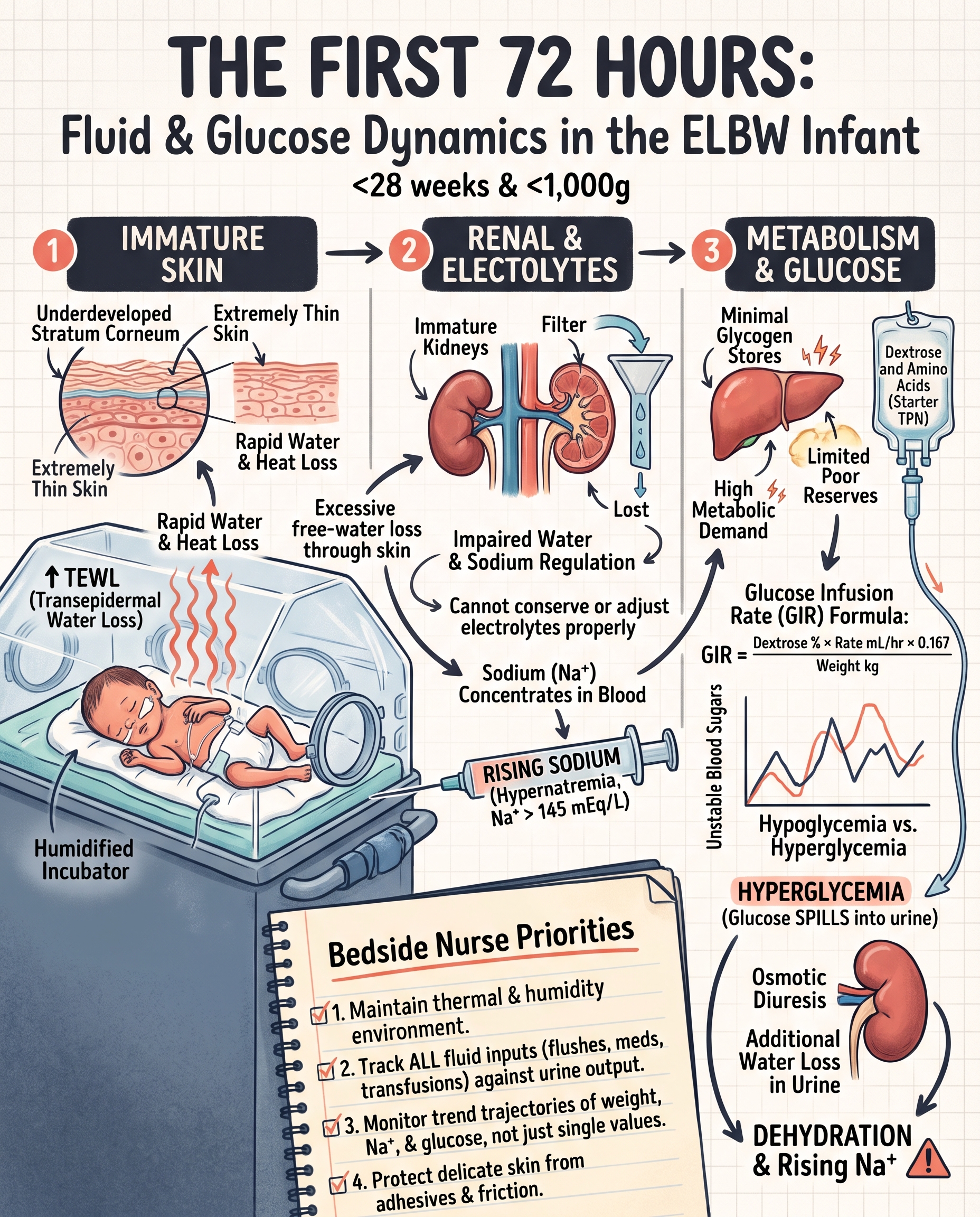
At <28 weeks, the stratum corneum, the outermost protective layer of skin, is still extremely immature.
This means water can escape through the skin at a much higher rate than it would in a term infant. We call this transepidermal water loss (TEWL).
This isn't just a skin issue, it's a fluid and electrolyte issue, too!
When babies lose water through their skin, they can become dehydrated and develop hypernatremia. So the humidity setting on the incubator isn't just about keeping the baby warm, it's also helping us manage their fluid balance.
Many units use high humidity during the first days of life, particularly for the most immature infants, and gradually decrease it as the skin barrier develops.
The exact humidity settings and weaning schedule should follow your unit's protocol because every NICU does it a little differently. We don’t have a universal standard.
A few things I want you to think about at the bedside
Every time we open the incubator, we potentially disrupt the thermal and humidified environment.
Every time we place cold hands or equipment on the baby we're creating an opportunity for heat loss.
And when the skin temperature probe isn't positioned appropriately, the incubator may respond to an inaccurate reading.
These are all small details that can have a meaningful impact on our patients.
Also, don't forget that overheating is a concern, too. We want to maintain a normal temperature, not simply make the baby as warm as possible.
Fluids and electrolytes: Watch them closely!
Remember that some weight loss during the first few days of life is normal. When babies are born, they undergo a physiologic contraction of their extracellular fluid compartment. So, in other words, they're supposed to lose some of that extra water.
But here's where things get tricky with our ELBW babies. They can also lose significant amounts of water through their immature skin, and their kidneys aren't particularly good at adjusting to changes in water and electrolyte balance. We're trying to support normal postnatal fluid changes without allowing excessive dehydration or fluid overload.
This is why we pay such close attention to daily weights, urine output, serum sodium, and total fluid balance.
And remember, the goal isn't necessarily to prevent weight loss. It's to recognize when the amount or pattern of weight loss is no longer appropriate for that baby.
If you've ever cared for a 23-weeker whose sodium suddenly climbed into the 150s, you've probably seen firsthand how challenging fluid management can be.
Let's start with something important: A high sodium level doesn't automatically mean the baby received too much sodium.
Especially during the first few days of life.
Why hypernatremia happens in these babies
When a baby loses more water than sodium, the sodium concentration in the blood increases.
So an ELBW baby with a rising sodium level may actually be experiencing a free-water deficit.
This is particularly common in the first few days of life, when skin water losses are greatest.
Now imagine you're caring for a 600-gram baby and over the last 24 hours their weight has decreased more than expected, their serum sodium has increased, and their urine output is changing.
What are you thinking about? I hope you're thinking about the overall fluid balance, including insensible water loss.
What's the humidity in the incubator? Has the incubator been opened frequently? Is the baby receiving phototherapy? What is their total fluid intake?
The important thing is to look at the whole picture rather than responding to the sodium number in isolation.
What about hyponatremia?
A low sodium level can mean different things depending on when it develops and what's happening clinically.
During the first few days, hyponatremia may be related to excess free water or impaired water excretion. But later, especially after the first week, sodium losses through the immature kidneys can become a significant issue.
Preterm kidneys are not particularly good at conserving sodium.
And as these babies grow, their sodium requirements may increase.
So if you have a baby with falling sodium levels and poor weight gain, you need to consider whether sodium losses or inadequate sodium intake are contributing.This is why trends in weight, urine output, fluid intake, and electrolytes are so important.
Don't forget the fluids we don't always think about
When you're caring for a 600-gram baby, even a small amount of fluid can make a difference. Every medication, saline flush after a medication, blood transfusion, etc. needs to be accounted for!
Potassium deserves attention, too
ELBW babies are also at risk for non-oliguric hyperkalemia during the first few days of life. That means they can have an elevated potassium level even when they're producing urine. This can happen because of immature cellular potassium regulation and renal handling.
So don't assume that a baby with adequate urine output can't develop hyperkalemia. Trend the labs, assess for contributing factors, and recognize that significant hyperkalemia can cause dangerous cardiac arrhythmias.
Glucose: Why both low and high levels matter
Let's talk about glucose.
When we think about newborn glucose problems, hypoglycemia is often the first thing that comes to mind.
ELBW babies are at risk. They have minimal glycogen stores, very little fat, high metabolic demands, and immature mechanisms for maintaining glucose homeostasis.
They simply don't have the same energy reserves as a term baby.
This is why early glucose delivery is so important. But glucose alone isn't enough! Don't forget, our ELBW babies also need early protein (amino acids) to help minimize protein breakdown (catabolism), improve nitrogen balance, and promote growth during this critical period.
Know your glucose infusion rate
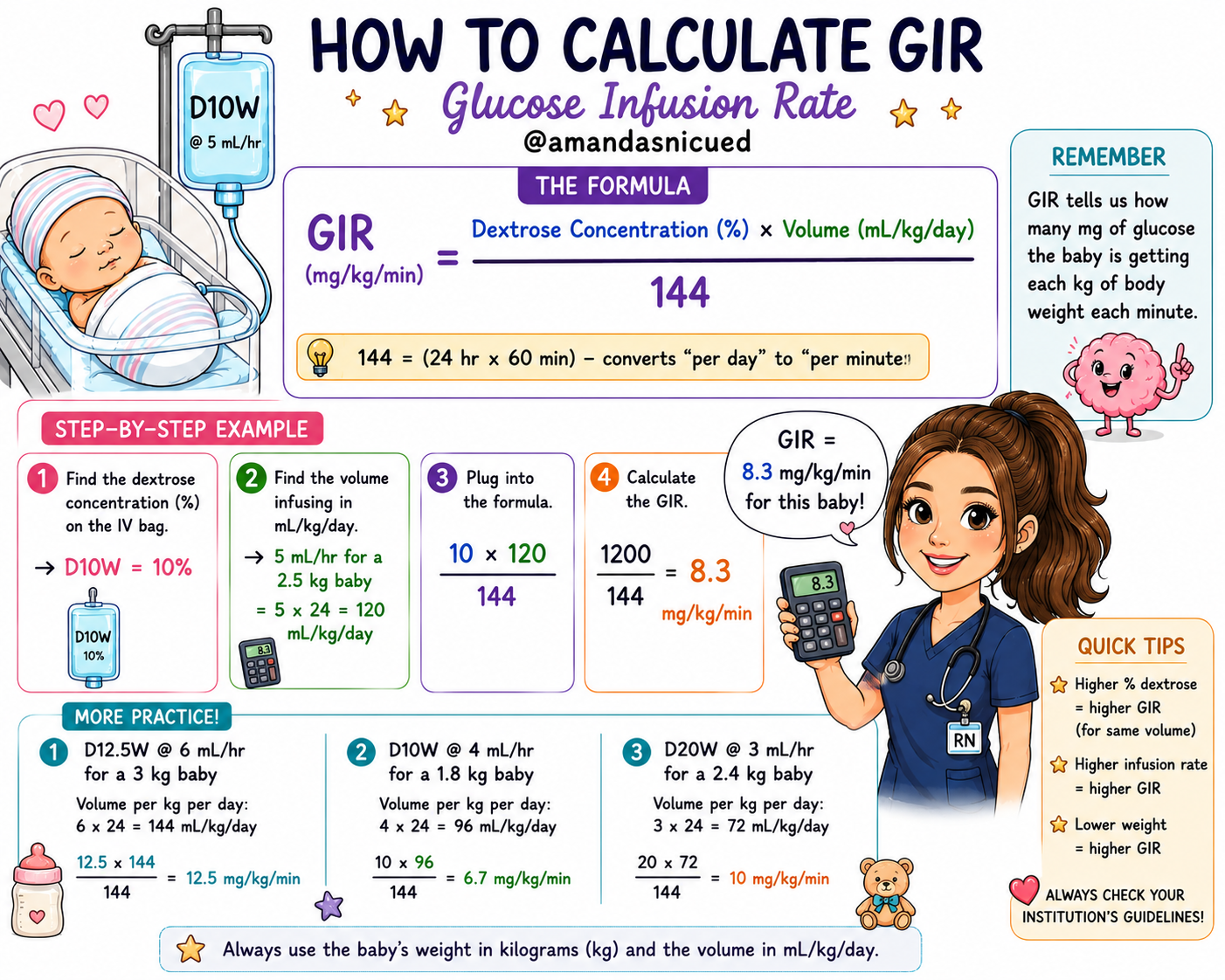
One of the calculations I think every NICU nurse should be comfortable with is the glucose infusion rate, or GIR.
Why?
Because it tells you how much glucose the baby is actually receiving, based on their weight.
You may have two babies receiving D10, but if they're receiving different fluid rates relative to their weight, they're not necessarily receiving the same amount of glucose.
The formula is:
GIR (mg/kg/min) = [Dextrose (%) × TF (mL/kg/day)] ÷ 144
A common initial GIR is approximately 4–6 mg/kg/min, with adjustments based on the infant's needs and glucose measurements.
But hyperglycemia is common, too
Hyperglycemia is actually very common in extremely preterm babies, particularly during the first week.
Why?
Because their insulin response and glucose utilization are immature.
Add in the stress of critical illness, infection, medications, or other physiologic stressors, and glucose regulation becomes even more challenging.
When glucose levels become sufficiently elevated, glucose can spill into the urine and contribute to osmotic diuresis. That means the baby loses additional water through the kidneys.
Recall our discussion about sodium. If a baby is losing more free water through both the skin and urine, what might happen to their sodium concentration?
This is why I love connecting these concepts. They're not separate problems. They're all related.
Respiratory distress syndrome: It's more than just a lack of surfactant
Of course, we can't talk about caring for ELBW babies without discussing respiratory distress syndrome (RDS). Most of these extremely preterm babies have some degree of surfactant deficiency. But what does that actually mean for their breathing?
Remember, surfactant reduces surface tension within the alveoli. Without adequate surfactant, the alveoli are more likely to collapse, particularly at the end of expiration. That makes it harder for the baby to maintain functional residual capacity. When the alveoli repeatedly collapse, the baby has to work harder to reopen them.
Think about blowing up a balloon. Those first few breaths can be challenging because you're trying to open something that's completely collapsed. Once there's some air inside, it becomes easier.
That's a simplified way to think about why maintaining lung volume matters so much.
Why CPAP helps
CPAP provides continuous distending pressure that helps keep the alveoli open at the end of expiration. By helping maintain functional residual capacity, CPAP can improve oxygenation and reduce the work required to repeatedly reopen collapsed alveoli.
But CPAP doesn't replace surfactant.
The European Consensus Guidelines recommend considering surfactant when a baby with worsening RDS requires an FiO₂ greater than 0.30 on CPAP of at least 6 cmH₂O. Of course, the decision also depends on the baby's clinical condition, gestational age, respiratory effort, and your unit's approach.
What happens after surfactant?
This is one of the most important things I want nurses to anticipate.
Lung compliance can improve very quickly after surfactant administration.
That means the ventilator settings that were appropriate before the dose may suddenly be too much.
Before surfactant, the lungs are stiff and difficult to inflate. After surfactant, the alveoli become easier to open and stabilize.
If the baby is receiving pressure-controlled ventilation and lung compliance improves, the same pressure may now deliver a larger tidal volume.
What could happen? Overdistension, excessive ventilation, falling CO₂ levels, and potentially air leaks. Don’t forget what we talked about earlier regarding CO₂ and cerebral blood flow.
With volume-targeted ventilation, the ventilator adjusts the pressure needed to deliver the set tidal volume. After surfactant improves lung compliance, less pressure is typically required to deliver that same volume.
After surfactant administration, be sure to watch the baby's oxygen requirement, tidal volumes when available, chest movement, respiratory status, and CO₂ trends.
Be prepared for rapid adjustments to respiratory support in collaboration with your team.
Skin care: One more thing that affects everything else
I want to come back to the skin for a moment because it's easy to underestimate just how important it is.
For an ELBW baby, the skin is much more than a protective covering. It's involved in fluid balance, temperature regulation, and infection prevention. And because the skin barrier is so immature, even routine care can create injury. Think about adhesives, repeated tape removal, antiseptic solutions, pressure from devices, and friction during handling.
A small skin injury in a 24-weeker is not necessarily a small problem. It can increase water loss, contribute to temperature instability, and create an entry point for microorganisms.
This is why we have to be thoughtful about the products we use, how we secure devices, and how we remove adhesives. Silicone-based products and other skin-protective strategies may be useful depending on the clinical situation and your unit's policies.
And when it comes to antisepsis, we need to consider both infection prevention and the potential for chemical irritation or injury in extremely immature skin.
There isn't a one-size-fits-all approach.
Putting it all together: What should you be watching?
Let's imagine you're caring for a 24-week baby on day two of life.
Coming on your shift you notice
The serum sodium has increased.
The baby has lost more weight than expected.
Their glucose levels have been elevated.
Their urine output has increased.
Now, instead of seeing four unrelated findings, start connecting them.
Could this baby be experiencing excessive free-water loss through the skin? Could hyperglycemia be contributing to osmotic diuresis? Is the current humidity appropriate? What is the baby's total fluid intake? What do the trends suggest?
That's the kind of clinical reasoning helps you understand the whole picture and anticipate the needs of your patient.
And here's another example.
Your baby just received surfactant. Their oxygen requirement is decreasing, which is wonderful. But their tidal volumes are increasing and their CO₂ is falling. Rather than simply celebrating the improved oxygenation, you're recognizing that the lungs may now be receiving more ventilation than they need. You're anticipating the need to adjust support and communicating those changes to your team.
That's the difference between knowing what to do and understanding why you're doing it.
Final thoughts
Caring for ELBW babies is complex, and there is so much more we could discuss, including nutrition, infection prevention, hemodynamics, neurodevelopmental care, and family-centered care.... But I hope this gives you a better understanding of some of the major priorities during those first few days.
Because while these babies are incredibly small, the physiologic changes happening in their bodies are anything but simple.
And the little things we do at the bedside really do matter.
Maintaining humidity. Watching sodium trends. Protecting the skin. Recognizing changes after surfactant. Being thoughtful about how we handle and position our patients.
These interventions are grounded in physiology.
And the more you understand that physiology, the more confident you'll become in recognizing changes, anticipating complications, and advocating for your patients.
That's what I want for every NICU nurse.
Keep asking WHY. That's how we grow.
Want to keep learning the WHY behind NICU care?
If you enjoyed this deep dive into caring for our tiniest patients, I'd love for you to join my newsletter!
Every other week, I share practical NICU education that goes beyond memorizing numbers and interventions. We'll break down the physiology, connect it to what you're seeing at the bedside, and explore the WHY behind what we do so you can feel more confident caring for your patients.
Sign up for my free newsletter and let's keep learning together! 💜
References
American Heart Association & American Academy of Pediatrics. (2025). Part 5: Neonatal resuscitation: 2025 American Heart Association and American Academy of Pediatrics guidelines for cardiopulmonary resuscitation and emergency cardiovascular care. Circulation. https://pubmed.ncbi.nlm.nih.gov/41122887/
Fawke, J., Monnelly, V., Madar, J., Main, C., Tinnion, R., Wallace, F., Yates, J., Wyllie, J., Wood, T., & Benson Clarke, A. (2025). European Resuscitation Council guidelines 2025: Newborn resuscitation and support of transition of infants at birth. Resuscitation, 215(Suppl. 1), 110766. https://doi.org/10.1016/j.resuscitation.2025.110766
Bissinger, R. L., Annibale, D. J., & Fanning, B. A. (Eds.). (2019). Golden hours: Care of the very low birth weight neonate. National Certification Corporation.
Wyrebek, R. (2027) Extremely Low Birth Weight Infant in Comprehensive Neonatal Nursing Care (7th Ed). Springer
Transparency Note: As an educator, sharing accurate clinical physiology is my top priority. Every word, concept, and clinical scenario in this post was written by me. I used AI solely as an editorial tool for grammar review and to bring my infographic concepts to life.

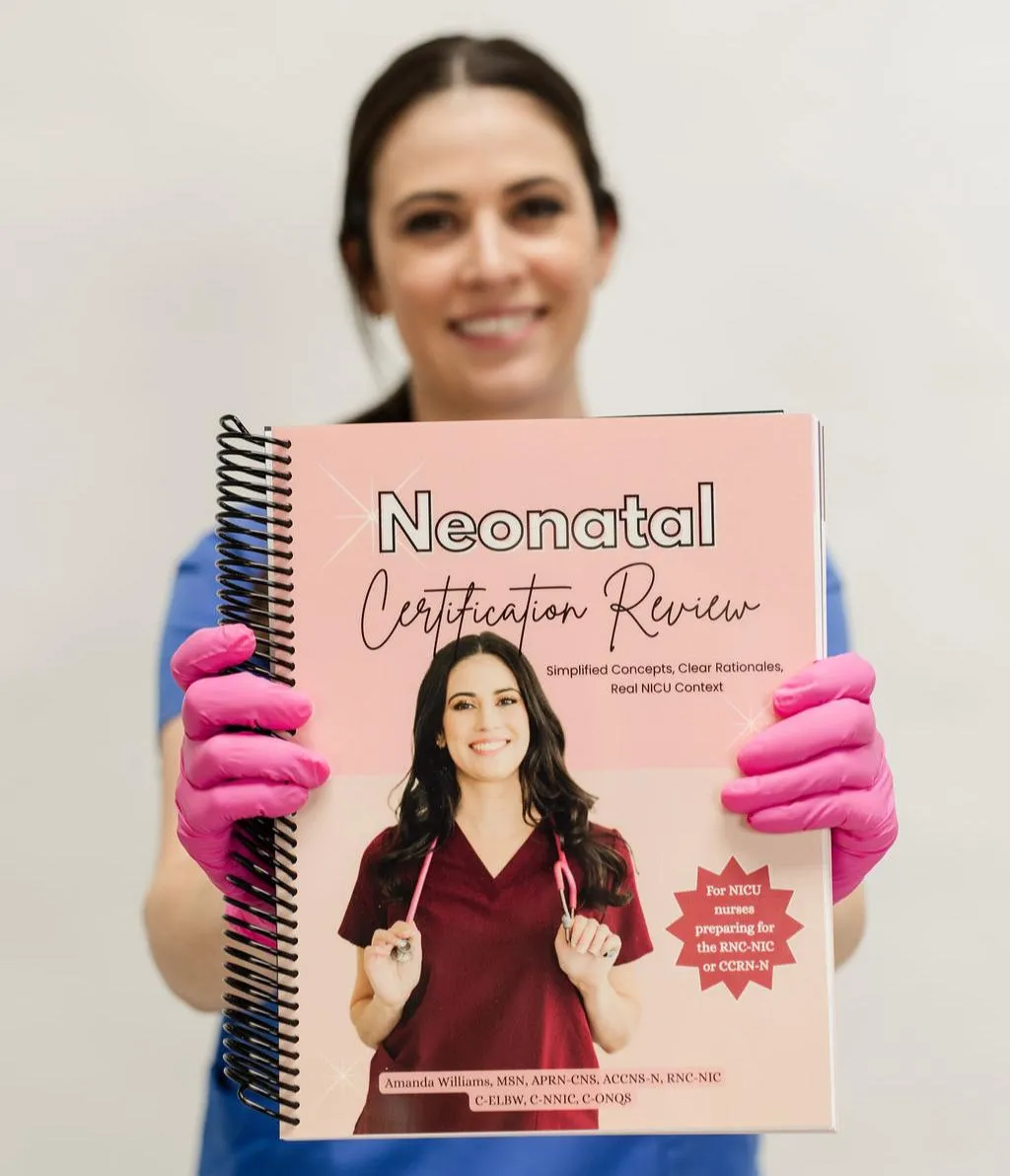
NEONATAL CERTIFICATION
REVIEW BOOK
📌 What’s Inside:
- 13 comprehensive chapters covering core NICU certification content
- Clear, organized breakdowns for fast recall
- Peer-reviewed to ensure clinical accuracy and depth
- Ideal for RNC-NIC or CCRN-N prep — or as a reference guide for NICU nurses at any level
- Plenty of space to write in and take notes
📚Table of Contents:
- Maternal Health & Birth History
- Intrauterine to Extrauterine Transition
- Neonatal Resuscitation
- Thermoregulation
- Neurologic System
- Respiratory System
- Oxygen, Ventilation, & Acid-Base Balance
- Cardiovascular System
- Nutrition & Feeding
- Hematopoietic System
- Infection & Immunology
- Professional Practice

Ready to kickstart your journey to becoming a certified NICU nurse?
Look no further!
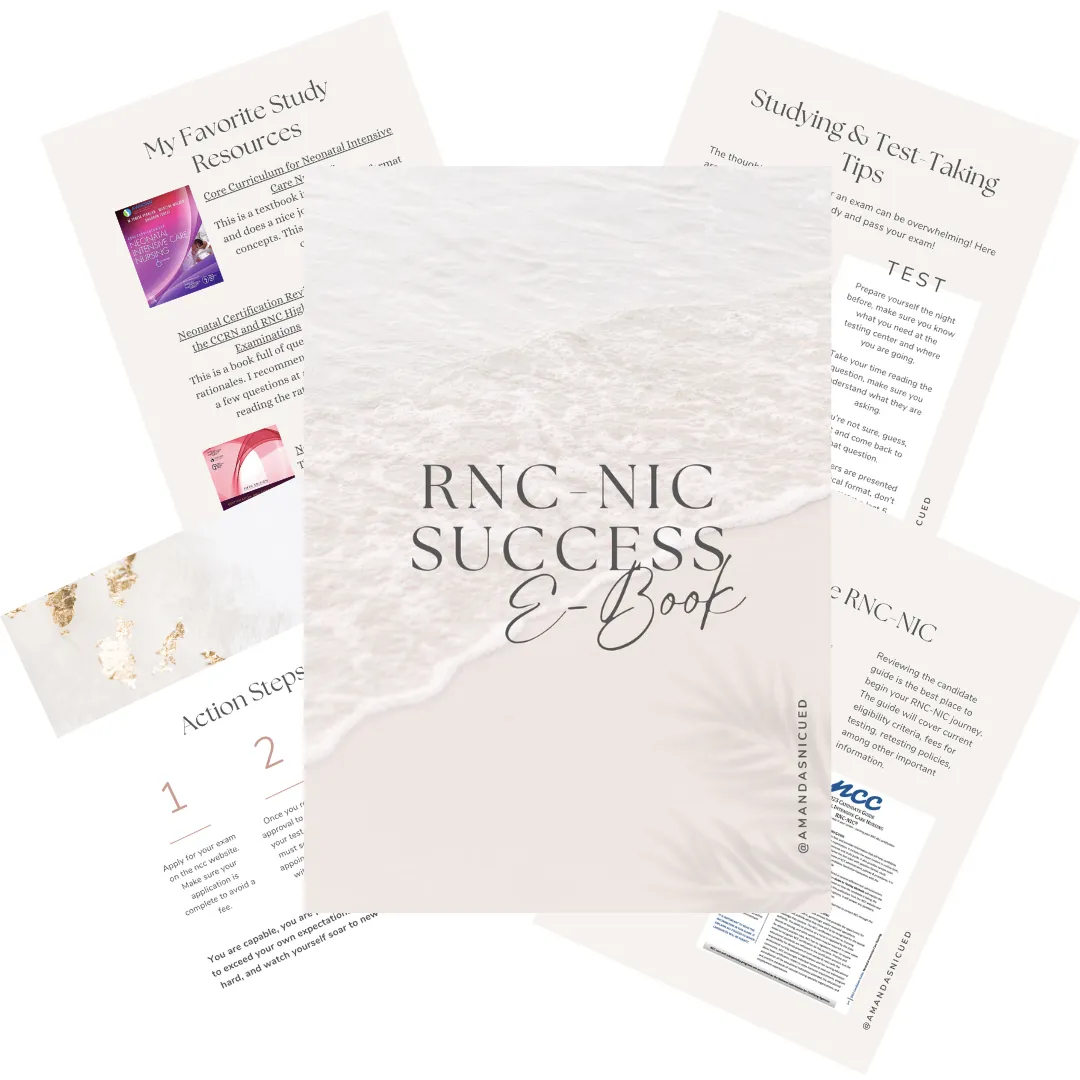
Grab my FREE E-Book packed with essential study and test-taking strategies for the RNC-NIC.
In the E-Book I give you the resources you need including the link to access the candidate guide, several types of books to study from, some of my favorite strategies, an outline of the content you should review, and a blank calendar for you to make your study plan!
Frequently Asked Questions About the RNC-NIC exam

What is the RNC-NIC?
The RNC-NIC is a competency-based exam that tests the specialty knowledge of nurses in the United States & Canada who care for critically ill newborns and their families.
The RNC-NICU is a nationally recognized certification that recognizes the registered nurse for their specialty knowledge and skill.

Who can take the RNC-NIC exam?
Nurses can take this exam after a minimum of two years experience in the NICU caring for critically ill newborns and their families.

Which books should I use?
I'm glad you asked! There are many excellent books to help you prepare for the RNC-NIC, I gathered ande describe each of them for you in my FREE e-book.
Is there a course to help me study?
Yes! Many hospitals host their own certification course and there are a few online courses. See my RNC-NIC test taking tips E Book for more information
What happens if I don't pass the exam?
If you don't pass the exam on your first try you can try again after 90 days. You will have to reapply after 90 days and pay a retest fee. There is no limit to the number of times you can take the exam (however a candidate can only sit for the exam twice per year).
Can I make more money if I take the RNC-NIC exam and get certified?
Yes! Many hospitals provide a raise or a bonus for nurses with specialty certifications. Hospitals also typically hire at a higher base salary when nurses have a certification.


Find me @amandasnicued on these channels or Email me
hey nurses don't miss out
© Copyright 2024. AmandasNICUEd. All rights reserved. | Terms & Conditions | Privacy Policy Contact: [email protected]