


Welcome to Amanda's NICU Education



RNC-NIC Exam Prep & NICU Education for Nurses
I'm Amanda, a neonatal Clinical Nurse Specialist, NICU educator, and NICU nurse who's been caring for critically ill newborns since 2009.
I currently work as a Clinical Nurse Specialist in a Level IV NICU in Los Angeles, where I support neonatal nurses, providers, and families through education, evidence-based practice, and clinical expertise.
I created Amanda's NICU Ed to make high-quality NICU education more approachable and to help nurses feel more confident at the bedside and prepared for the RNC-NIC exam.
NICU Education for Nurses at Every Stage
Whether you're preparing for the RNC-NIC, starting your career in the NICU, or looking to strengthen your neonatal nursing knowledge, Amanda's NICU Ed provides practical, evidence-based education designed specifically for NICU nurses.

RNC-NIC Exam Prep
Prepare for the RNC-NIC with focused review materials, study resources, and practical test-taking strategies.

NICU Education
Build your knowledge and confidence with approachable education covering the concepts NICU nurses use every day.

NICU Resources
Find study guides, books, free resources, and educational content to support your growth as a neonatal nurse.

Not very many people love taking tests but as a self-acclaimed "forever student" who has taken (and passed) five different certification exams I am no longer afraid of tests! "Way to brag", you might be thinking but I want to help YOU pass your certification exam too!
Introducing Amanda's RNC-NIC Success digital course - your ultimate study companion!
Gain unlimited, on-demand access for life, ensuring you're primed to ace your certification exam.
I'm here to help you succeed and I can't wait for you to share with me that you PASSED the RNC-NIC EXAM!!!

PIP vs. PEEP: A Practical Guide for NICU Nurses Blog Post
PIP vs. PEEP: What Every NICU Nurse Needs to Know
One of my most popular Instagram videos uses a glove to demonstrate the difference between PIP and PEEP. I think it resonates because PIP and PEEP are two of those concepts that can feel deceptively simple until you are standing at the bedside looking at a ventilator full of numbers.
You see PIP, PEEP, delta P, tidal volume, inspiratory time, mean airway pressure, respiratory rate, and FiO₂. If you are a newer NICU nurse (or you simply have not cared for a ventilated baby in a while) it is easy for those numbers to get jumbled together.
So, when you receive report on a ventilated baby, what do you actually need to understand about PIP and PEEP? What does each pressure do? How are they different? And what should you be assessing at the bedside?
Let’s break it down.
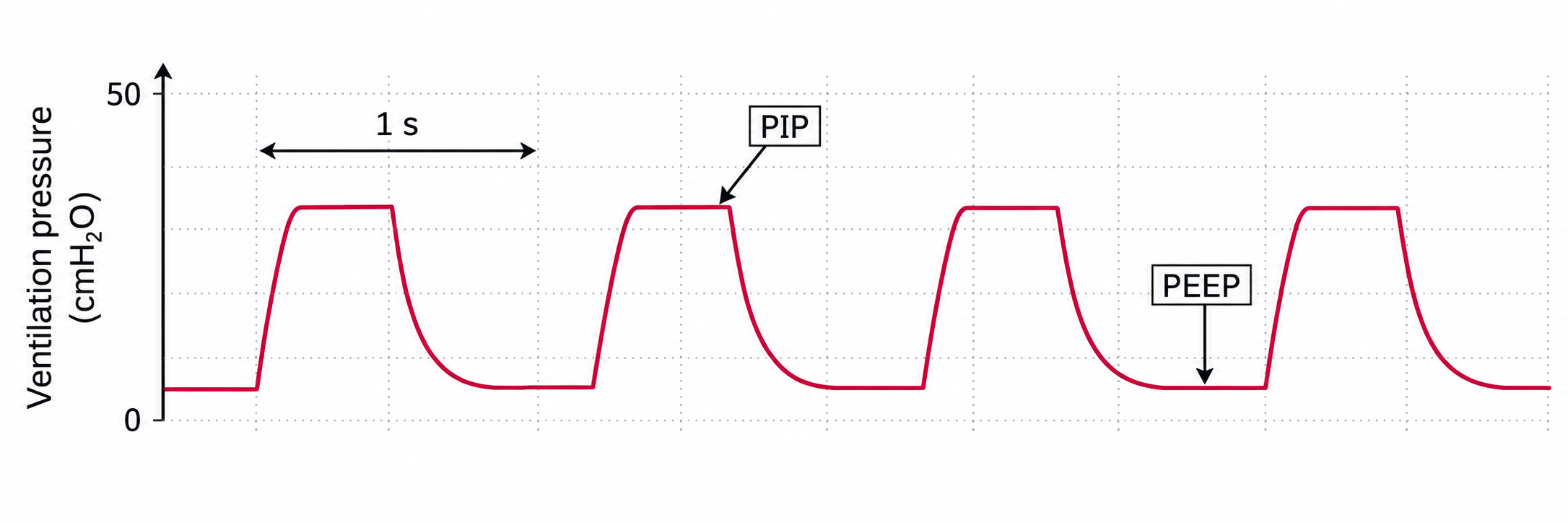
The short version: PIP inflates, and PEEP keeps open
During conventional mechanical ventilation, airway pressure rises during inspiration and falls during expiration.
PIP (peak inspiratory pressure) is the highest airway pressure reached during inspiration.
PEEP (positive end-expiratory pressure) is the pressure maintained at the end of expiration.
An easy way to remember the difference is:
PIP is the top of the breath. PEEP is the baseline the lungs return to.
Or, even more simply:
PIP Inflates the lungs. PEEP helps kEEp them open.
That is the memory aid. Now let’s talk about what is actually happening physiologically.
What does PIP do?
PIP helps generate the pressure needed to move gas into the lungs during a mechanical breath. In pressure-targeted ventilation, increasing the pressure delivered above PEEP will usually increase the tidal volume.
It may help to think about one way we remove more carbon dioxide: taking a larger breath. A larger pressure change can produce a larger breath and improve carbon dioxide removal, but PIP alone does not tell you how large that breath will be.
What is tidal volume?
Tidal volume is the amount of gas delivered with each breath. It is commonly displayed in milliliters and considered relative to the baby’s weight in mL/kg.
For many preterm infants with acute respiratory distress syndrome, a tidal volume near 4–6 mL/kg may be used as a starting target. But that is not a universal “normal” for every baby or every disease process. An infant with established severe bronchopulmonary dysplasia may need a very different ventilation strategy (and often a larger tidal volume) than a newly born preterm infant with RDS.
Do not become so fixed on one number that you forget to ask:
What disease process does this baby have?
What does our unit typically target for this population?
What tidal volumes have been effective and safe for this individual baby?
How are the blood gas, work of breathing, FiO₂ requirement, and clinical examination trending?
The same PIP does not guarantee the same tidal volume
This is one of the most important concepts to understand: PIP does not determine tidal volume by itself.
The tidal volume produced by a pressure-targeted breath is influenced by several factors, including:
The difference between PIP and PEEP
Lung and chest-wall compliance
Airway resistance, including the resistance of a small endotracheal tube
Secretions, water in the circuit, or a kinked or obstructed tube
Inspiratory time and rise time or flow
Patient effort and ventilator synchrony
The ventilator mode
Air leak around the endotracheal tube
Imagine two babies receiving the same pressures.
Baby A has stiff, surfactant-deficient lungs with poor compliance. The lungs are difficult to expand, so the delivered tidal volume may be small.
Baby B has more compliant lungs, perhaps after surfactant administration. The same pressure may now produce a much larger tidal volume.
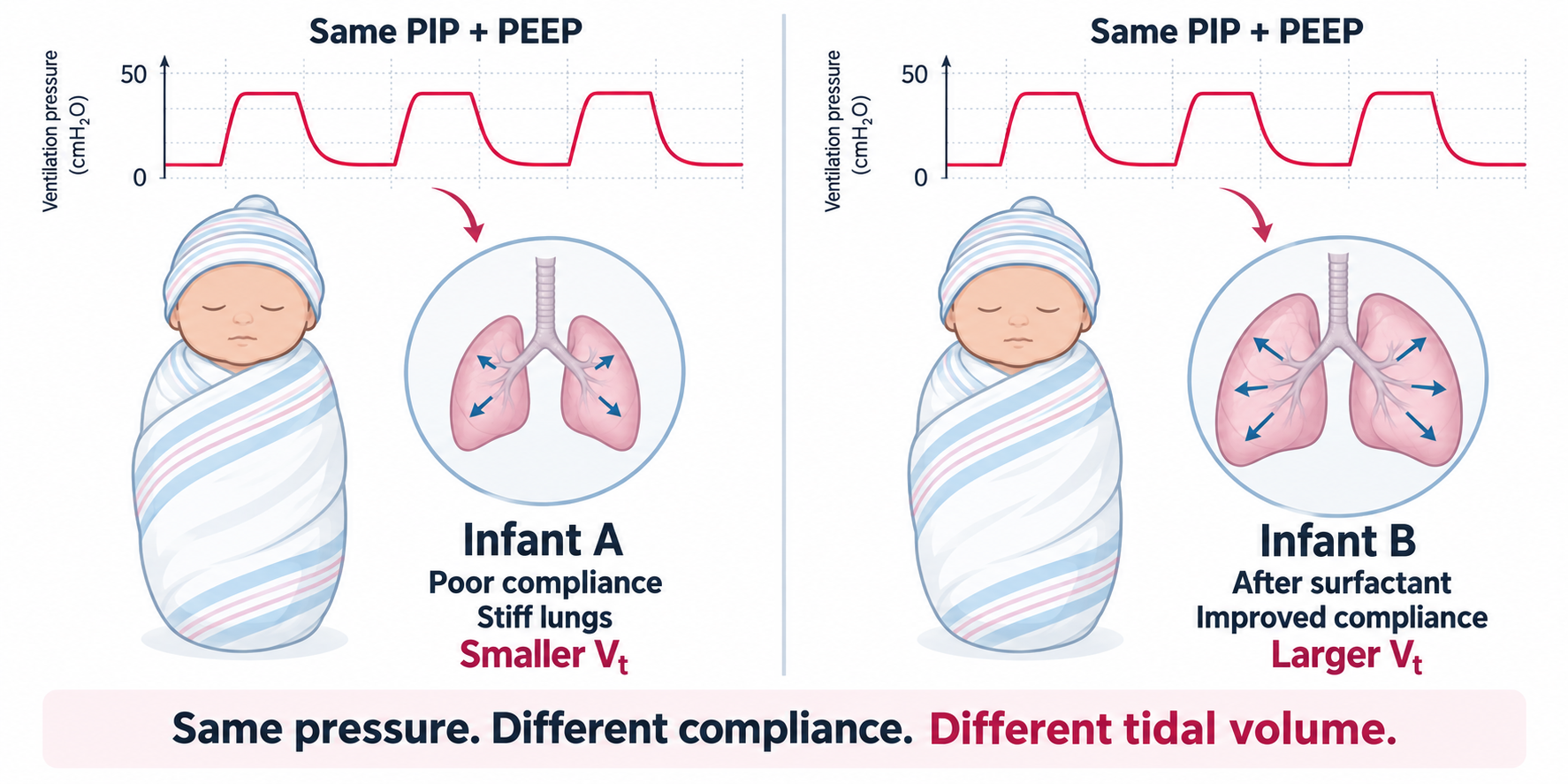
That is why tidal volume can change even when the set PIP has not changed. It is also why nurses should watch closely after surfactant, suctioning, repositioning, or any other intervention that may change lung recruitment, resistance, or compliance.
Pressure-targeted versus volume-targeted ventilation
In pressure-targeted ventilation, the clinician sets the inspiratory pressure, and the resulting tidal volume varies as the baby’s lung mechanics change.
With volume-targeted ventilation, such as volume guarantee, the clinician selects a target tidal volume. The ventilator then adjusts the pressure from breath to breath, within the prescribed pressure limit, to try to deliver that target volume.
In other words:
Pressure-targeted ventilation: pressure is set; tidal volume can vary.
Volume-targeted ventilation: tidal volume is targeted; the pressure required can vary.
Either way, you still need to look at both pressure and volume. A target tidal volume does not eliminate the need to monitor the PIP required to achieve it.
What does PEEP do?
PEEP maintains a small amount of positive pressure in the lungs at the end of expiration. Instead of allowing the lungs to return all the way to zero pressure, PEEP helps recruit and stabilize alveoli and maintain functional residual capacity (FRC). FRC is the volume of gas that remains in the lungs after a normal expiration.
Why does that matter?
Think about blowing up a balloon for a party. The first few breaths are usually the hardest because you are trying to open a completely collapsed balloon. Once there is a little air inside it, the balloon is easier to inflate again.
PEEP works through a similar concept. When alveoli remain appropriately recruited at the end of expiration, the next breath does not have to reopen completely collapsed lung units over and over again.
Maintaining alveolar recruitment also preserves more surface area for gas exchange. When alveoli are open and perfused, oxygen can diffuse across the alveolar-capillary membrane into the blood, and carbon dioxide can move in the opposite direction to be exhaled.
This is why PEEP is often closely connected with oxygenation: it supports functional residual capacity, alveolar recruitment, and ventilation-perfusion matching. But PEEP does not work in isolation. Too little may allow collapse, while too much can overdistend the lungs and impair pulmonary blood flow, venous return, and cardiac output.
What is delta P?
In neonatal pressure-controlled ventilation, delta P is commonly used to describe the pressure difference between PIP and PEEP:
Delta P = PIP − PEEP
For example:
PIP 20 − PEEP 5 = delta P 15 cm H₂O
Delta P is the pressure change above the end-expiratory baseline. Along with the baby’s lung mechanics, inspiratory time, and effort, it helps influence how much tidal volume enters the lungs during a pressure-targeted breath.
What happens to delta P when PEEP changes?
Suppose the PIP remains at 20 cm H₂O:
Setting | PIP | PEEP | Delta P |
Before the change | 20 | 5 | 15 |
After PEEP increases | 20 | 8 | 12 |
If PEEP rises while PIP stays the same, delta P becomes smaller. That may reduce tidal volume and carbon dioxide removal (but not always). If the higher PEEP recruits previously collapsed lung and improves compliance, the tidal volume may be maintained or even improve despite the smaller pressure difference.
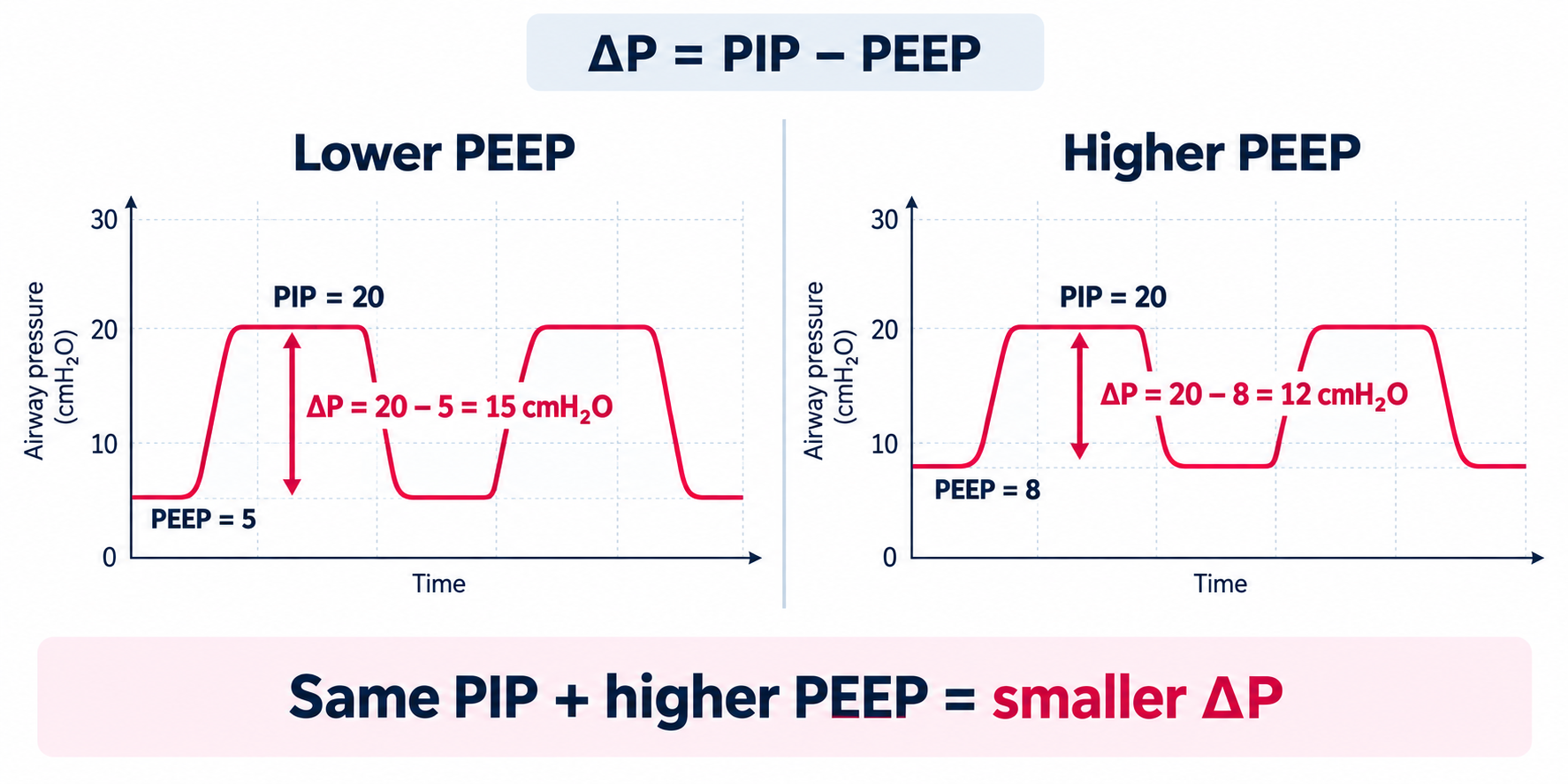
This is exactly why ventilator numbers must be interpreted together and in the context of the baby’s response.
There is also an important mode-specific caveat: during volume-targeted ventilation, the ventilator may automatically increase the delivered PIP, up to the set pressure limit, to maintain the target tidal volume after PEEP changes.
Ventilation versus oxygenation
The terms ventilation and oxygenation are often used together, but they describe different problems.
Ventilation | Oxygenation |
Removal of carbon dioxide from the body | Movement of oxygen into the blood |
Reflected by the PaCO₂ or another measured CO₂ trend and the pH | Reflected by SpO₂, PaO₂, FiO₂ requirement, and the overall clinical picture |
Strongly influenced by alveolar minute ventilation: effective tidal volume × respiratory rate | Influenced by FiO₂, alveolar recruitment, ventilation-perfusion matching, diffusion, and mean airway pressure |
In pressure-targeted ventilation, PIP and delta P can affect ventilation by changing tidal volume | PEEP can support oxygenation by maintaining recruited alveoli and functional residual capacity |
This is a helpful framework, but don’t think of oxygenation snd ventilation as completely separate. Increasing PEEP may improve ventilation if it recruits lung and improves compliance. Or it can worsen ventilation if it causes overdistension or reduces delta P without improving recruitment. Increasing PIP can also raise mean airway pressure and affect oxygenation.
Don't think of it as solely, “Which number controls CO₂, and which number controls oxygen?” Instead ask:
What problem are we trying to solve, and how did the baby respond to the change?
Mechanical ventilation is always a balance
When providing mechanical ventilation the goal is to support gas exchange while minimizing injury and maintaining hemodynamic stability.
If PEEP is too low
Alveoli may collapse at the end of expiration.
Functional residual capacity may decrease.
Ventilation-perfusion mismatch and oxygen need may worsen.
Repeated collapse and reopening can contribute to atelectrauma.
If PEEP is too high
Alveoli may become overdistended.
Pulmonary vascular resistance may increase.
Venous return and cardiac output may decrease.
Air trapping or air leak risk may increase in susceptible lungs.
The effective pressure difference may fall if PIP is not adjusted.
If the effective inspiratory pressure or tidal volume is too low
Minute ventilation may be inadequate.
Carbon dioxide may accumulate.
Respiratory acidosis may develop.
The baby may show increased work of breathing or poor synchrony.
If the effective inspiratory pressure or tidal volume is too high
The lungs may become overdistended.
Volutrauma and barotrauma may contribute to ventilator-induced lung injury.
Hypocarbia may develop, depending on the rate and the baby’s spontaneous breathing.
Hemodynamics may be affected.
The right balance is individual. A pressure that is excessive for one baby may be necessary for another because the underlying compliance, resistance, disease, and ventilatory goals are different.
Do not stop at the ventilator screen
The numbers matter, but they are only part of the assessment. When you care for a ventilated baby, connect the settings and measurements to the patient in front of you.
Ask:
Is there appropriate and symmetrical chest movement?
What are the SpO₂ and FiO₂ trends and is the pulse-oximeter waveform reliable?
I love to look at the histograms for the big picture
What are the carbon dioxide and pH trends on the blood gas or other ordered monitoring like TCOM or End-tidal CO2?
What tidal volumes and minute ventilation are being delivered?
Is there a significant or changing endotracheal-tube leak?
Are breath sounds equal? Have they changed?
Is the endotracheal tube secure and at the expected depth?
Is there evidence of secretions, tube obstruction, circuit condensation, or an air leak?
Is the baby breathing comfortably and synchronously with the ventilator?
Has the baby recently received surfactant, been suctioned, repositioned, or had another intervention that could change lung mechanics?
How does the baby respond to handling and position changes?
A single number cannot tell you whether the baby is well ventilated, well oxygenated, appropriately recruited, comfortable, or hemodynamically stable. Trends and the full clinical picture matter.
The bedside takeaway
When PIP, PEEP, delta P, and tidal volume start blending together in your mind, come back to these four points:
PIP is the highest airway pressure reached during inspiration. It helps move gas into the lungs.
PEEP is the pressure maintained at the end of expiration. It helps maintain recruitment and functional residual capacity.
Delta P is the difference between PIP and PEEP. In pressure-targeted ventilation, it helps influence tidal volume—but does not determine it alone.
The baby matters more than any isolated number. Always connect the ventilator settings with tidal volume, lung mechanics, blood gases, oxygen need, waveforms, hemodynamics, and your bedside assessment.
Or, if you need the simplest memory aid:
PIP inflates. PEEP keeps open. Delta P is the difference. Then look at the baby.
If this helped make ventilator pressures click, share it with an orientee, colleague, or NICU friend who may need the reminder. And subscribe to my newsletter for free, practical NICU education that helps you understand not just what we do at the bedside but why.
References and further reading
Chakkarapani, A. A., et al. (2020). Current concepts of mechanical ventilation in neonates—Part 1: Basics.
Klingenberg, C., et al. (2017). Volume-targeted versus pressure-limited ventilation in neonates. Cochrane Database of Systematic Reviews.

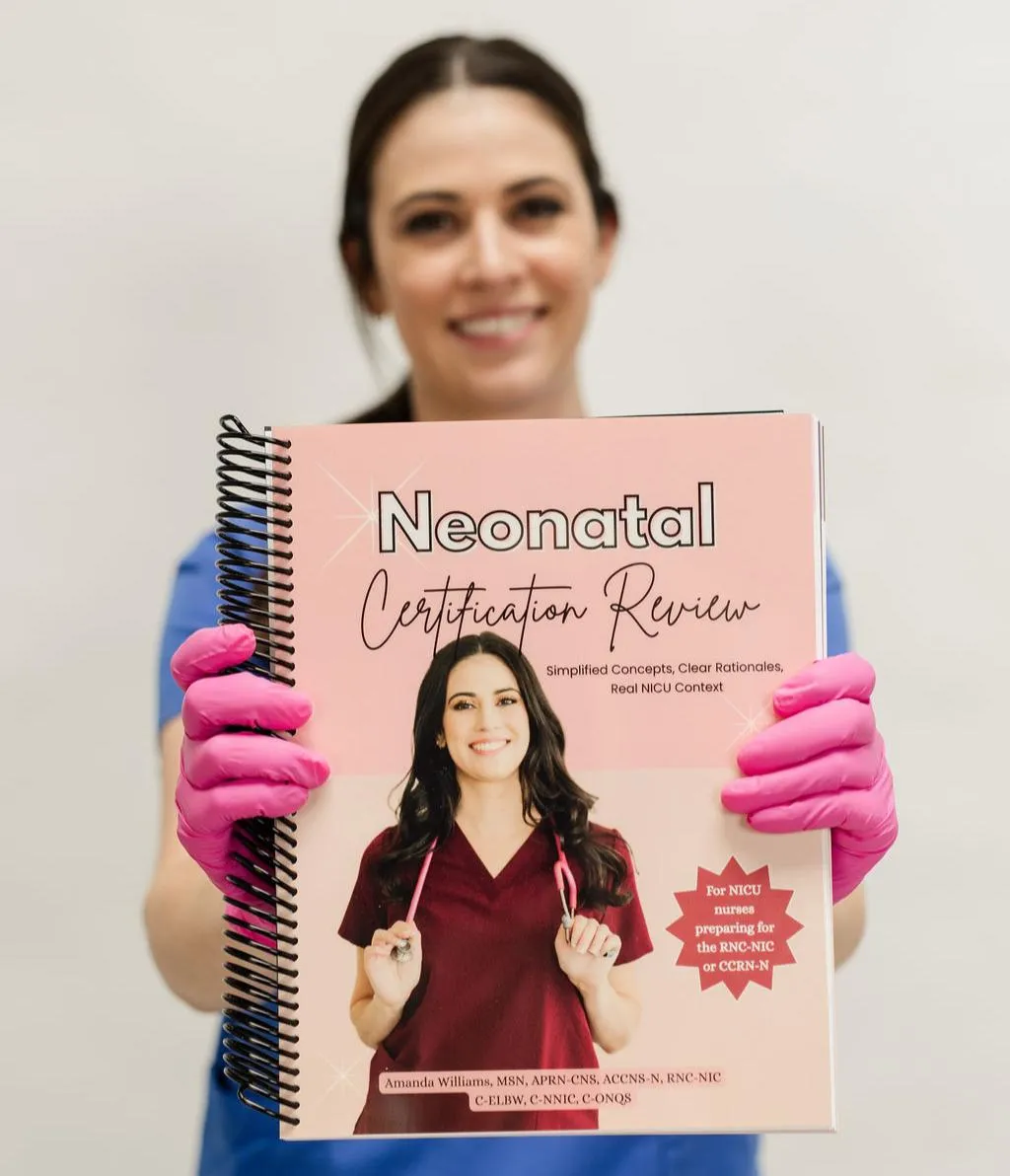
NEONATAL CERTIFICATION
REVIEW BOOK
📌 What’s Inside:
- 13 comprehensive chapters covering core NICU certification content
- Clear, organized breakdowns for fast recall
- Peer-reviewed to ensure clinical accuracy and depth
- Ideal for RNC-NIC or CCRN-N prep — or as a reference guide for NICU nurses at any level
- Plenty of space to write in and take notes
📚Table of Contents:
- Maternal Health & Birth History
- Intrauterine to Extrauterine Transition
- Neonatal Resuscitation
- Thermoregulation
- Neurologic System
- Respiratory System
- Oxygen, Ventilation, & Acid-Base Balance
- Cardiovascular System
- Nutrition & Feeding
- Hematopoietic System
- Infection & Immunology
- Professional Practice

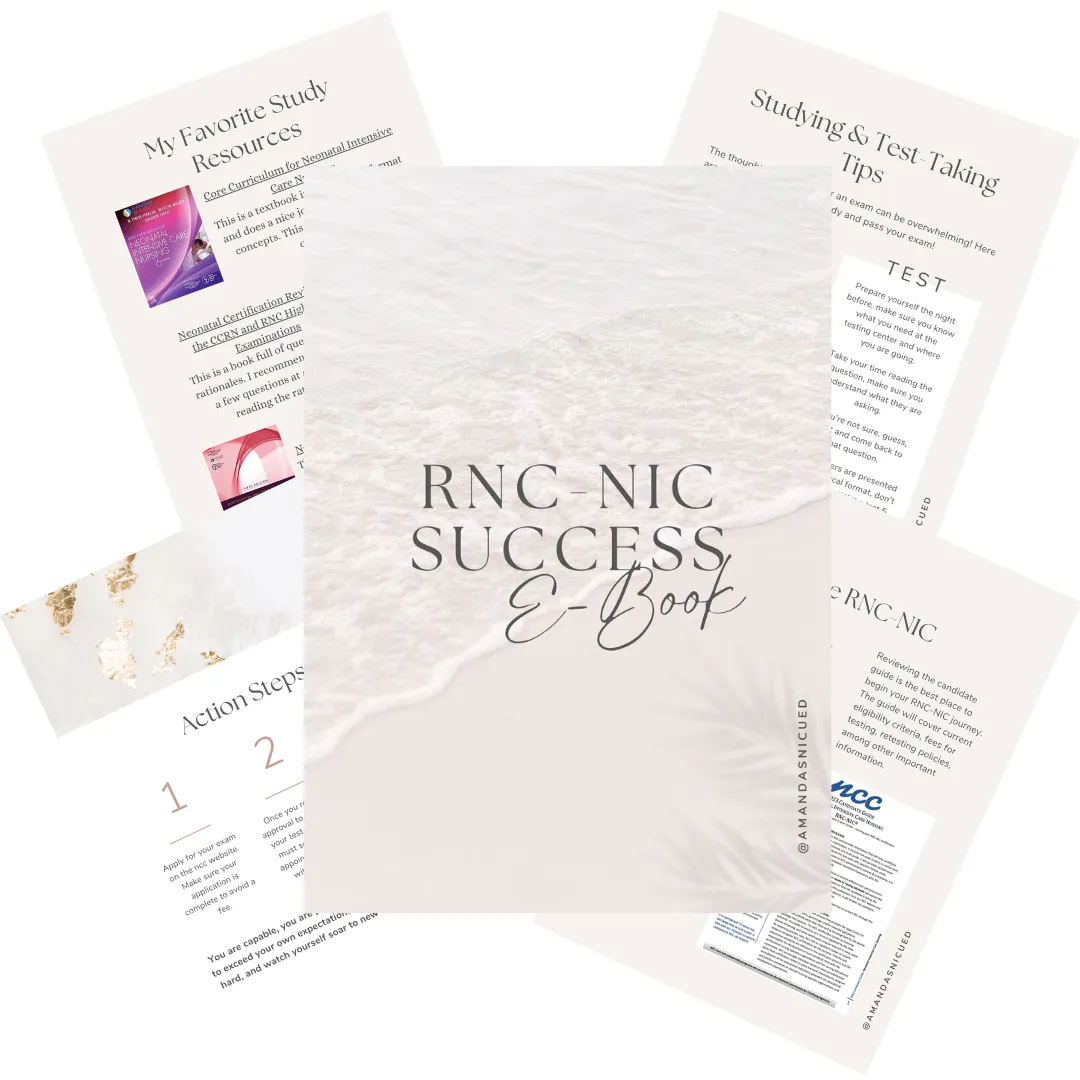
Ready to kickstart your journey to becoming a certified NICU nurse?
Look no further!
Grab my FREE E-Book packed with essential study and test-taking strategies for the RNC-NIC.
In the E-Book I give you the resources you need including the link to access the candidate guide, several types of books to study from, some of my favorite strategies, an outline of the content you should review, and a blank calendar for you to make your study plan!
Frequently Asked Questions About the RNC-NIC exam

What is the RNC-NIC?
The RNC-NIC is a competency-based exam that tests the specialty knowledge of nurses in the United States & Canada who care for critically ill newborns and their families.
The RNC-NICU is a nationally recognized certification that recognizes the registered nurse for their specialty knowledge and skill.

Who can take the RNC-NIC exam?
Nurses can take this exam after a minimum of two years experience in the NICU caring for critically ill newborns and their families.

Which books should I use?
I'm glad you asked! There are many excellent books to help you prepare for the RNC-NIC, I gathered ande describe each of them for you in my FREE e-book.
Is there a course to help me study?
Yes! Many hospitals host their own certification course and there are a few online courses. See my RNC-NIC test taking tips E Book for more information
What happens if I don't pass the exam?
If you don't pass the exam on your first try you can try again after 90 days. You will have to reapply after 90 days and pay a retest fee. There is no limit to the number of times you can take the exam (however a candidate can only sit for the exam twice per year).
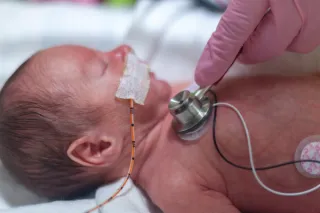
Can I make more money if I take the RNC-NIC exam and get certified?
Yes! Many hospitals provide a raise or a bonus for nurses with specialty certifications. Hospitals also typically hire at a higher base salary when nurses have a certification.

Find me @amandasnicued on these channels or Email me
hey nurses don't miss out
© Copyright 2024. AmandasNICUEd. All rights reserved. | Terms & Conditions | Privacy Policy Contact: [email protected]