


Welcome to Amanda's NICU Education



RNC-NIC Exam Prep & NICU Education for Nurses
I'm Amanda, a neonatal Clinical Nurse Specialist, NICU educator, and NICU nurse who's been caring for critically ill newborns since 2009.
I currently work as a Clinical Nurse Specialist in a Level IV NICU in Los Angeles, where I support neonatal nurses, providers, and families through education, evidence-based practice, and clinical expertise.
I created Amanda's NICU Ed to make high-quality NICU education more approachable and to help nurses feel more confident at the bedside and prepared for the RNC-NIC exam.
NICU Education for Nurses at Every Stage
Whether you're preparing for the RNC-NIC, starting your career in the NICU, or looking to strengthen your neonatal nursing knowledge, Amanda's NICU Ed provides practical, evidence-based education designed specifically for NICU nurses.

RNC-NIC Exam Prep
Prepare for the RNC-NIC with focused review materials, study resources, and practical test-taking strategies.

NICU Education
Build your knowledge and confidence with approachable education covering the concepts NICU nurses use every day.

NICU Resources
Find study guides, books, free resources, and educational content to support your growth as a neonatal nurse.

Not very many people love taking tests but as a self-acclaimed "forever student" who has taken (and passed) five different certification exams I am no longer afraid of tests! "Way to brag", you might be thinking but I want to help YOU pass your certification exam too!
Introducing Amanda's RNC-NIC Success digital course - your ultimate study companion!
Gain unlimited, on-demand access for life, ensuring you're primed to ace your certification exam.
I'm here to help you succeed and I can't wait for you to share with me that you PASSED the RNC-NIC EXAM!!!

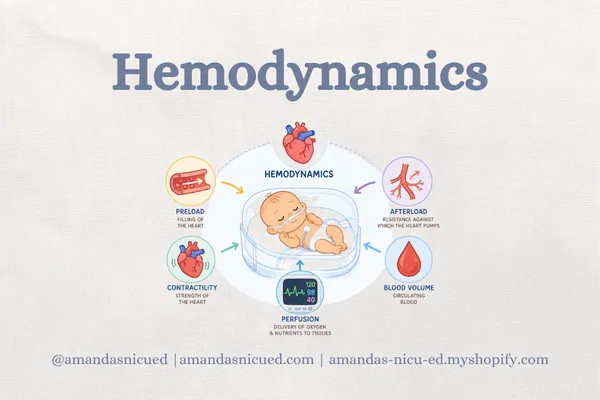
Hemodynamics Concepts Every NICU Nurse Should Understand
Back to Basics: Hemodynamics Concepts Every NICU Nurse Should Understand
Blood pressure is one of the first numbers we glance at every single shift. MAPs, systolic, diastolic, pulse pressure. We watch them closely.
Quick refresher since it's easy to gloss over: MAP, or mean arterial pressure, isn't just the average of your systolic and diastolic numbers. It's the average pressure driving blood forward through the vascular system across the entire cardiac cycle, weighted more toward diastole since the heart spends more time relaxed than contracted. It's the number most closely tied to actual organ perfusion, which is exactly why we lean on it so heavily in the NICU.
But here's a question worth sitting with for a second: do you remember what creates that number in the first place?
If we don't understand normal hemodynamics, conditions like persistent pulmonary hypertension, septic shock, PDA physiology, congenital heart disease, and even why certain treatments help while others fall flat, are going to feel like a black box forever. Once you get the "why" behind the numbers, everything else starts clicking into place.
So let's go back to basics.
Hemodynamics Is Really Just About Delivery
Strip away the jargon and hemodynamics is simply this: how blood moves through the body, and whether enough oxygen is actually making it to the tissues that need it.
Every single thing we monitor in the NICU is really just trying to answer one question: are the organs getting enough oxygen?
Blood pressure is only one piece of that puzzle. Cardiac output matters. Hemoglobin matters. Oxygen saturation matters. Blood flow matters. Even oxygen consumption matters. Change any one of these, and oxygen delivery can quietly suffer, even while the blood pressure on the monitor looks perfectly "normal."
Think of oxygen delivery like a relay race:
Adequate cardiac output
Enough hemoglobin
Oxygen actually attached to that hemoglobin
Blood reaching the tissues
The tissues actually extracting the oxygen once it gets there
Drop the baton at any one of those handoffs, and delivery falls apart. This is exactly why two babies can have identical blood pressures and completely different clinical pictures. The number on the monitor is never the whole story.
Cardiac Output: The Amount of Blood the Heart Pumps
Here's one of the most important equations in neonatal physiology, and one worth committing to memory:
Cardiac Output = Heart Rate × Stroke Volume
Adults have options when they need to boost cardiac output. They can beat faster, squeeze harder, or increase stroke volume. But it’s a different story for our neonatal patients.
The neonatal myocardium is structurally immature. There are fewer organized contractile elements, less compliance, and a limited ability to meaningfully bump up stroke volume, largely because it has a higher ratio of stiffer collagen in the heart tissue compared to an adult heart. That stiffness means the neonatal heart sits on a flatter part of the Frank–Starling curve, so the same increase in preload that would meaningfully boost an adult's cardiac output does much less for a newborn.
The bottom line I want you to walk away with is that neonatal cardiac output is heart-rate dependent. When you see a newborn's heart rate climbing, that's often the only lever the heart has left to pull to protect cardiac output.
Let's Talk About That Frank-Starling Curve for a Second
This concept deserves more than a passing mention, because it explains a decision you make (or question) constantly at the bedside: when does a fluid bolus actually help, and when is it just adding volume for volume's sake?
The Frank-Starling curve plots stroke volume against preload (end-diastolic volume). On the steep, early part of the curve, stretching the ventricle a little more with additional preload produces a meaningful jump in stroke volume. This is the part of the curve where a fluid bolus genuinely helps. But every heart eventually reaches a plateau, where adding more preload stops translating into more stroke volume. Push past that point, and you're not improving cardiac output anymore. You're just distending the ventricle.
The neonatal heart sits on a flatter curve to begin with, and reaches that plateau much sooner than an adult heart does. Because the immature myocardium is stiffer and less compliant, a baby's ventricle simply doesn't accommodate extra volume as forgivingly. That means a neonate can tip from "underfilled and bolus-responsive" to "volume overloaded" over a much narrower window than we might intuitively expect.
This is exactly why "just give a bolus" isn't a reflexive answer to hypotension in the NICU the way it might be reflexive in an adult ICU. A baby who's genuinely hypovolemic, from blood loss, dehydration, or capillary leak, may respond beautifully. But a baby whose hypotension is coming from poor contractility, a large PDA, or pulmonary hypertension can actually get worse with more volume: you risk pulmonary edema, worsening left-to-right shunting, and a ventricle straining even harder against a preload it already can't manage. Before reaching for fluids, it's worth asking why this baby is hypotensive in the first place, because the answer changes what actually helps.
What Determines Stroke Volume?
Three things:
Preload: how much blood fills the ventricle before it contracts.
Too little: dehydration, blood loss, excessive diuresis
Too much: ventricular dysfunction, volume overload, a hemodynamically significant PDA, heart failure
Contractility: how strongly the heart squeezes. This can take a hit from hypoxia, acidosis, sepsis, myocardial ischemia, severe pulmonary hypertension, or certain congenital heart defects. And unlike an adult heart, a newborn heart has much less reserve to dramatically ramp up contractility when it's under stress.
Afterload: the resistance the ventricle has to pump against. The left ventricle is pushing against systemic vascular resistance; the right ventricle is pushing against pulmonary vascular resistance.
Blood Pressure Is More Than One Number
Blood pressure reflects the tug-of-war between cardiac output and systemic vascular resistance:
Blood Pressure ≈ Cardiac Output × Systemic Vascular Resistance
Systolic pressure is the peak arterial pressure during ventricular contraction. It's shaped by stroke volume, contractility, and arterial compliance.
Diastolic pressure is what's left over while the heart relaxes. It reflects vascular tone, systemic vascular resistance, and how quickly blood is "running off" into the peripheral circulation. A very low diastolic pressure should make you think about a significant runoff lesion (a large PDA being the classic example).
Pulse pressure = Systolic − Diastolic.
Widened: think significant PDA or a hyperdynamic circulation
Narrow: think poor cardiac output, hypovolemia, or severe ventricular dysfunction
Blood Pressure Doesn't Equal Perfusion
This might be one of my favorite concepts: a "normal" blood pressure does not automatically mean the tissues are well perfused. And a low blood pressure doesn't always mean the organs are ischemic.
You have to look at the whole baby, every time:
Capillary refill
Urine output
Lactate
Mental status
Skin color
Peripheral pulses
NIRS trends, if you have access to them
Blood pressure is one piece of a much bigger puzzle.
Oxygen-Carrying Capacity
Even with perfect blood flow, that blood still has to actually carry oxygen. Oxygen-carrying capacity comes down to hemoglobin concentration and hemoglobin saturation.
Pulse oximetry tells you what percentage of hemoglobin is carrying oxygen. It does not tell you how much hemoglobin is actually available, or whether enough oxygen is reaching the tissues.
Here's a scenario to think about: a baby with a hemoglobin of 7 g/dL and a SpO₂ of 100% can still have impaired oxygen delivery. There's just not much hemoglobin around to do the carrying, no matter how saturated it is.
A Quick Word on Fetal Hemoglobin
There's another consideration we must think about when it comes to oxygenation… our babies aren't running on adult hemoglobin. They're predominantly running on fetal hemoglobin (HbF), and HbF behaves differently.
HbF has a higher affinity for oxygen than adult hemoglobin (HbA), meaning it grabs onto oxygen more eagerly in the lungs. That's exactly what a fetus needs in a low-oxygen intrauterine environment, pulling oxygen across the placenta from mom's circulation. But that same high affinity becomes a bit of a double-edged sword after birth: HbF also holds onto oxygen more tightly once it reaches the tissues, meaning it's more reluctant to release, or unload, that oxygen where it's actually needed.
On the oxygen-hemoglobin dissociation curve, this shows up as a left shift. This means that at any given PaO₂, HbF is more saturated than HbA would be. It's less willing to hand that oxygen off to the tissues. So a saturation number that looks reassuring may be giving you a slightly rosier picture than what's actually reaching the cells.
Oxygen Consumption: The Other Half of the Equation
Delivery is only half the story; tissues also have to consume that oxygen.
Consumption goes up with fever, agitation, pain, increased work of breathing, seizures, and shivering.
Consumption goes down with sedation, paralysis, and therapeutic hypothermia.
When demand outpaces delivery, tissues start extracting a greater percentage of whatever oxygen is available. This is where NIRS can be really helpful.
Clinical Pearl: Pulse Ox vs. NIRS
Think of pulse oximetry and NIRS as answering two completely different questions.
Pulse oximetry asks: "How much oxygen is attached to hemoglobin right now?"
NIRS asks: "After the tissues took what they needed, how much oxygen is left over?"
NIRS-based tissue oximetry gives us a window into that delivery-versus-consumption balance that pulse ox simply can't show us on its own. Used together, pulse ox and NIRS paint a much fuller picture of what's actually happening at the tissue level.
In Summary
Before we can make sense of pulmonary hypertension, we have to understand normal blood flow first. PPHN isn't just "high pressure in the lungs." It's a disease that reshapes cardiac output, right ventricular workload, oxygen delivery, oxygen consumption, and systemic blood flow, all at once.
Once the normal physiology clicks, the treatments finally start making sense too.
This week on Instagram, I'm kicking off a series: "Not All Pulmonary Hypertension Is the Same." We'll dig into why PPHN looks so different from pulmonary hypertension associated with BPD, why fetal circulation matters here, and how understanding the underlying physiology changes the way you actually care for these babies at the bedside.
Then, in next week's newsletter, we'll build on this foundation with a deeper dive into pulmonary hypertension in the NICU: the physiology, the common misconceptions, and the nursing considerations every NICU nurse should have in their back pocket.
Not subscribed yet? Now's a great time to join us!
References
de Boode, W. P., Kluckow, M., McNamara, P. J., & Gupta, S. (2018). Cardiac output monitoring in newborns. Early Human Development, 120, 15–21.
Cloherty, J. P., Eichenwald, E. C., Hansen, A. R., & Stark, A. R. (Eds.). (2023). Avery's diseases of the newborn (11th ed.). Elsevier.
Martin, R. J., Fanaroff, A. A., & Walsh, M. C. (Eds.). (2024). Fanaroff and Martin's neonatal-perinatal medicine: Diseases of the fetus and infant (12th ed.). Elsevier.
Lakshminrusimha, S., Keszler, M., Kirpalani, H., et al. (2021). Pulmonary hypertension in neonates: Advances in pathophysiology, diagnosis, and management. Circulation, 143(22), e879–e911. https://doi.org/10.1161/CIR.0000000000000967
Lakshminrusimha, S., Mourani, P. M., Mathew, B., et al. (2023). Pulmonary hypertension in the neonate and infant. Pediatric Research, 93(2), 317–331. https://doi.org/10.1038/s41390-022-02407-5

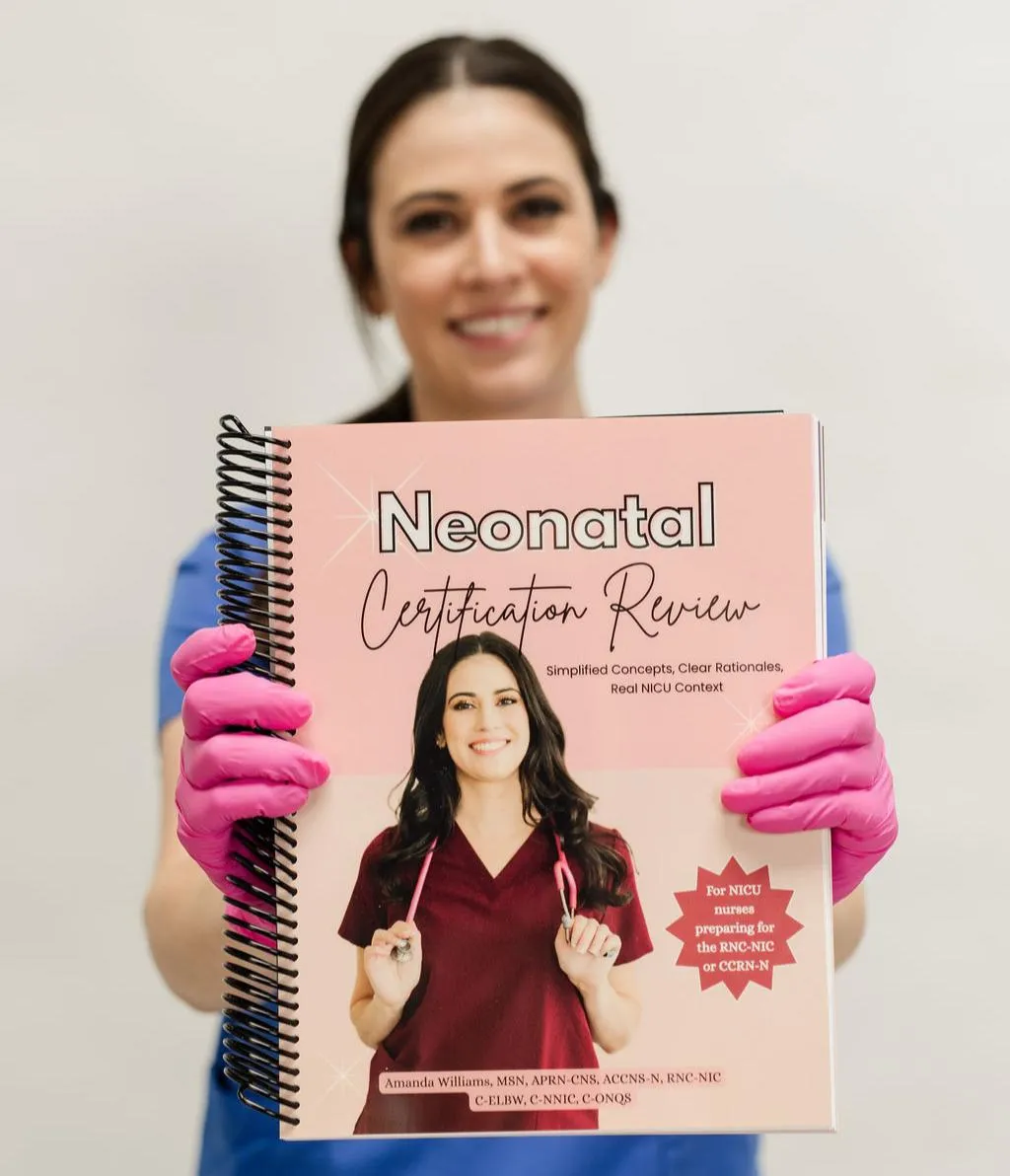
NEONATAL CERTIFICATION
REVIEW BOOK
📌 What’s Inside:
- 13 comprehensive chapters covering core NICU certification content
- Clear, organized breakdowns for fast recall
- Peer-reviewed to ensure clinical accuracy and depth
- Ideal for RNC-NIC or CCRN-N prep — or as a reference guide for NICU nurses at any level
- Plenty of space to write in and take notes
📚Table of Contents:
- Maternal Health & Birth History
- Intrauterine to Extrauterine Transition
- Neonatal Resuscitation
- Thermoregulation
- Neurologic System
- Respiratory System
- Oxygen, Ventilation, & Acid-Base Balance
- Cardiovascular System
- Nutrition & Feeding
- Hematopoietic System
- Infection & Immunology
- Professional Practice

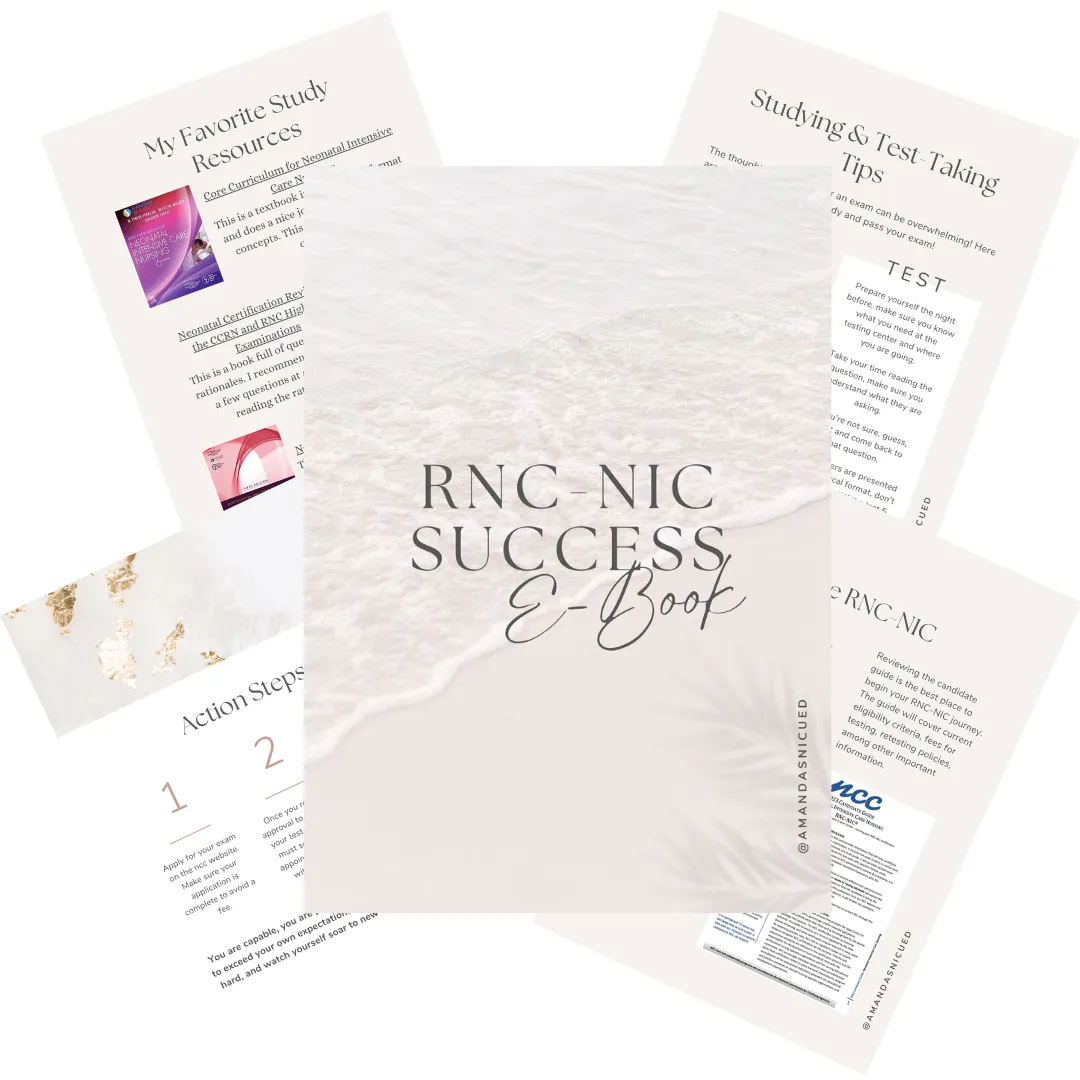
Ready to kickstart your journey to becoming a certified NICU nurse?
Look no further!
Grab my FREE E-Book packed with essential study and test-taking strategies for the RNC-NIC.
In the E-Book I give you the resources you need including the link to access the candidate guide, several types of books to study from, some of my favorite strategies, an outline of the content you should review, and a blank calendar for you to make your study plan!
Frequently Asked Questions About the RNC-NIC exam

What is the RNC-NIC?
The RNC-NIC is a competency-based exam that tests the specialty knowledge of nurses in the United States & Canada who care for critically ill newborns and their families.
The RNC-NICU is a nationally recognized certification that recognizes the registered nurse for their specialty knowledge and skill.

Who can take the RNC-NIC exam?
Nurses can take this exam after a minimum of two years experience in the NICU caring for critically ill newborns and their families.

Which books should I use?
I'm glad you asked! There are many excellent books to help you prepare for the RNC-NIC, I gathered ande describe each of them for you in my FREE e-book.
Is there a course to help me study?
Yes! Many hospitals host their own certification course and there are a few online courses. See my RNC-NIC test taking tips E Book for more information
What happens if I don't pass the exam?
If you don't pass the exam on your first try you can try again after 90 days. You will have to reapply after 90 days and pay a retest fee. There is no limit to the number of times you can take the exam (however a candidate can only sit for the exam twice per year).
Can I make more money if I take the RNC-NIC exam and get certified?
Yes! Many hospitals provide a raise or a bonus for nurses with specialty certifications. Hospitals also typically hire at a higher base salary when nurses have a certification.


Find me @amandasnicued on these channels or Email me
hey nurses don't miss out
© Copyright 2024. AmandasNICUEd. All rights reserved. | Terms & Conditions | Privacy Policy Contact: [email protected]