
Welcome to Amanda's NICU Education
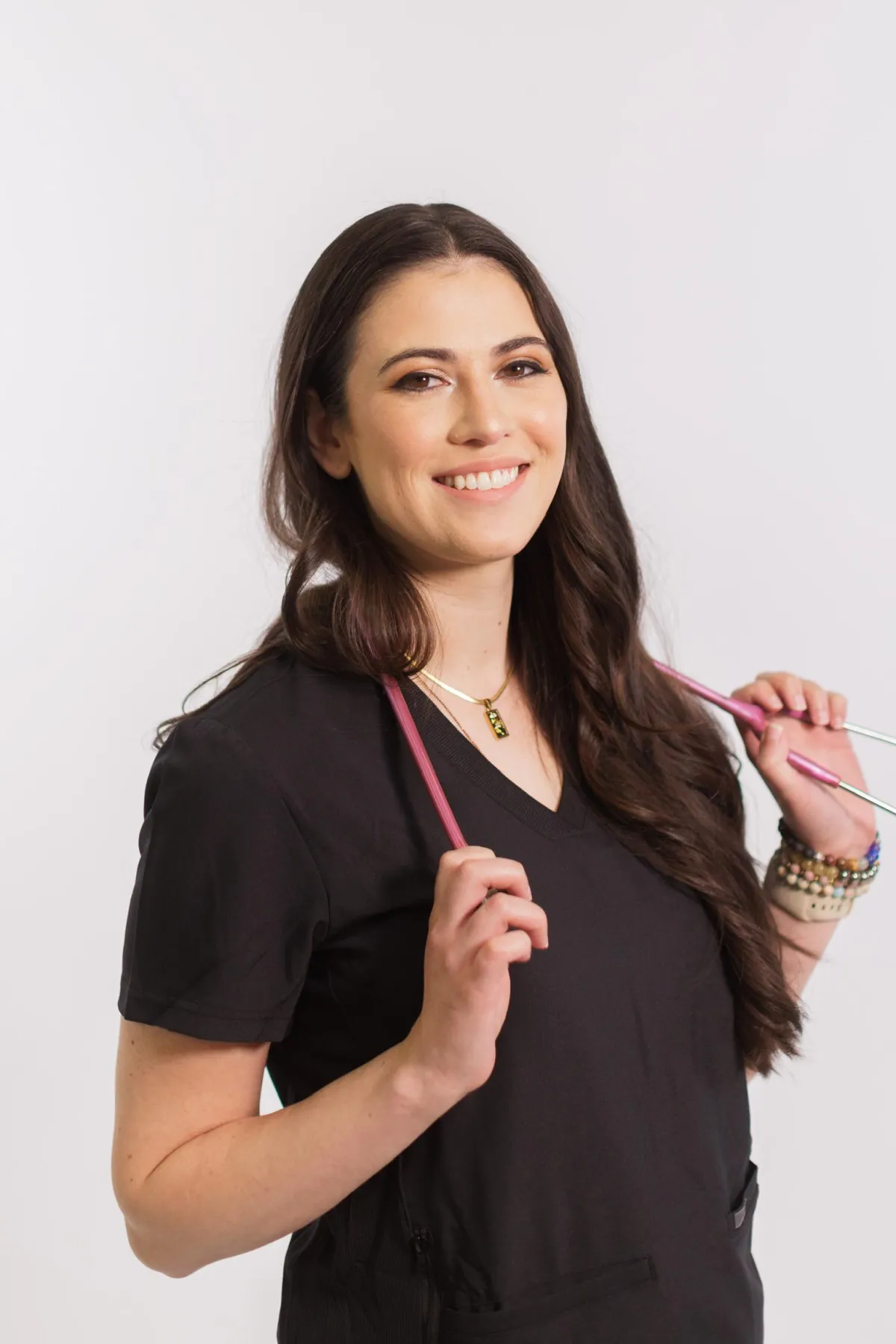

Hi! My name is Amanda. I'm a NICU nurse, Clinical Nurse Specialist, NICU Educator... basically your NICU BFF. If you want to talk NICU, I'm here for you! I love everything about NICU nursing and I'm eager to learn and share my knowledge with all my NICU friends.
I have been a NICU nurse since 2009 I am currently a Clinical Nurse Specialist in a Level IV NICU in Los Angeles.
I am passionate about educating the next generation of NICU nurses. I share my knowledge through platforms such as Instagram and Facebook and am excited to have you here on my website!
Click on the button below to sign up for my newsletter filled with NICU education and tips for all experience levels.

Not very many people love taking tests but as a self-acclaimed "forever student" who has taken (and passed) five different certification exams I am no longer afraid of tests! "Way to brag", you might be thinking but I want to help YOU pass your certification exam too!
Introducing Amanda's RNC-NIC Success digital course - your ultimate study companion!
Gain unlimited, on-demand access for life, ensuring you're primed to ace your certification exam.
I'm here to help you succeed and I can't wait for you to share with me that you PASSED the RNC-NIC EXAM!!!



Cytomegalovirus
Cytomegalovirus (CMV) in the NICU: What Every NICU Nurse Needs to Know
What if I told you the most common congenital infection in the world is one that many NICU nurses rarely see diagnosed?
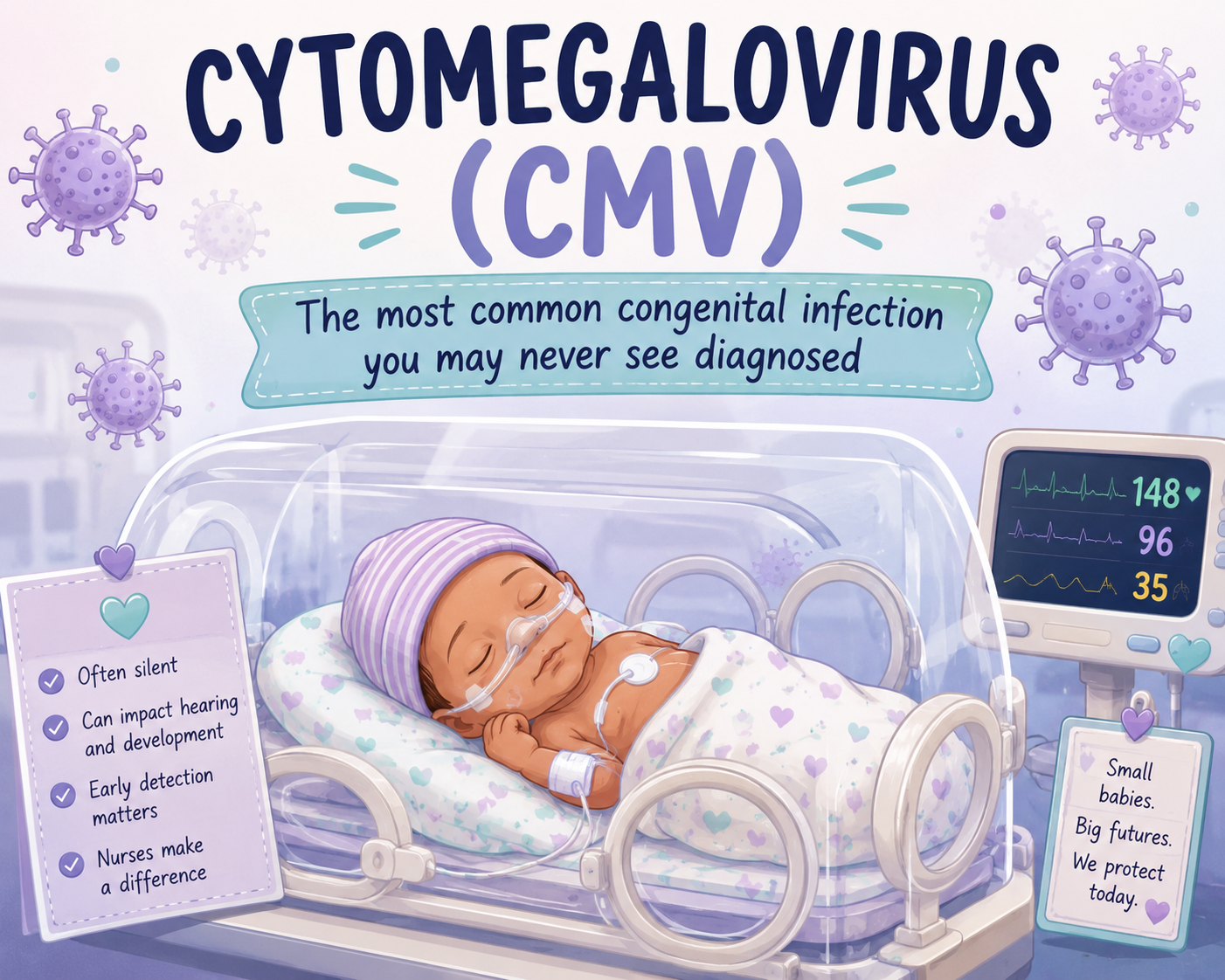
When we think about infections in the NICU, conditions like sepsis, NEC, VAP, or meningitis come to mind first. Yet cytomegalovirus (CMV) is the most common congenital infection worldwide and a leading cause of childhood hearing loss and neurodevelopmental disability.
The surprising part is that most babies with congenital CMV don't look sick.
The majority of infected infants are either mildly affected or completely asymptomatic at birth. They appear healthy and never raise concern during their NICU stay. Yet some of these infants will later develop hearing loss, developmental delays, or other long-term complications. This is often long after discharge.
June is CMV Awareness Month, and it's the perfect time to talk about a disease that is common, often silent, and easy to miss. CMV also presents a layer of complexity that's unique to neonatal care: extremely premature infants can acquire CMV after birth through breast milk or blood transfusions, occasionally leading to severe sepsis-like illness.
So what exactly is CMV, why does it matter in the NICU, and what should every NICU nurse know about recognizing risk factors, supporting diagnosis, and educating families?
Let's review together
What Is CMV?
CMV is a common virus in the herpesvirus family. In healthy adults and older children, it typically causes mild symptoms, or no symptoms at all. Once infected, a person carries the virus for life.
The concern in neonatology is transmission. CMV can be passed to infants during pregnancy, birth, breastfeeding, or blood transfusion. Infection acquired before birth is called congenital CMV (cCMV), and it affects approximately 0.5–1% of all live births making it the most common congenital infection in the world. That's more common than conditions we screen for routinely.
Why Does CMV Matter?
CMV is one of the leading infectious causes of:
Sensorineural hearing loss
Neurodevelopmental impairment
Vision abnormalities
Cerebral palsy
Developmental delays
Here's what makes it so difficult to catch: only about 10–15% of infants with congenital CMV show obvious symptoms in the newborn period. The rest appear healthy. But babies who look perfectly fine can develop hearing loss or developmental concerns months or years later.
This is why early recognition, appropriate testing, and long-term follow-up are so important.
How Do Infants Acquire CMV?
There are four main routes of transmission you need to know about:
Congenital (in utero): The most clinically significant route. CMV crosses the placenta when a pregnant person acquires a new infection or experiences viral reactivation during pregnancy. Congenital infection carries the highest risk for long-term neurologic and developmental complications.
Intrapartum: Infants can be exposed to CMV during delivery through contact with maternal cervical or genital secretions. In healthy term infants, this is rarely clinically significant.
Breast milk: CMV frequently reactivates in lactating mothers and can be shed into breast milk. For healthy term infants, this postnatal exposure is usually mild or asymptomatic. For extremely premature infants, it's a different story (more on that below).
Blood products: Though uncommon with modern blood banking practices, CMV can be transmitted through transfusions. This is one reason CMV-negative blood products are used for NICU patients.
What Does Congenital CMV Look Like?
Congenital CMV can affect multiple organ systems, and the presentation varies widely. Possible findings include:
Intrauterine growth restriction (IUGR)
Microcephaly
Petechiae or a "blueberry muffin" rash
Jaundice
Hepatosplenomegaly
Thrombocytopenia
Abnormal neurologic exam
Seizures
Hearing loss
Not every infant will have all of these findings. Some will have none of them. That's what makes CMV so easy to overlook. Maintaining a high index of suspicion, especially in infants with any of these features, is one of the most important things a NICU nurse can do.
Postnatal CMV in the Premature Infant
While congenital CMV often gets the most attention, postnatal CMV infection is its own challenge in the NICU particularly for extremely premature infants.
Infants born before 30 weeks gestation or weighing less than 1500 grams appear to be at greatest risk. These babies may develop a clinical picture that looks a lot like bacterial sepsis:
Temperature instability
Feeding intolerance
Respiratory deterioration
Increased oxygen requirements
Thrombocytopenia and neutropenia
Cholestasis
Prolonged hospitalization
When cultures stay negative and a preterm infant continues to deteriorate without a clear explanation, CMV should be on your differential.
How Is CMV Diagnosed?
Timing is everything.
To diagnose congenital CMV, testing must occur within the first 21 days of life. After that window, it becomes impossible to confirm whether infection occurred before or after birth.
Diagnosis is typically made using:
Saliva PCR
Urine PCR
Some institutions perform targeted screening for infants with risk factors: failed newborn hearing screen, microcephaly, growth restriction, or abnormal neuroimaging. Others are moving toward universal screening. Know your institution's policy, and flag infants with risk factors to the team early.
When Is Treatment Needed?
Not every infant with CMV requires antiviral treatment. However, symptomatic infants especially those with CNS involvement, hearing loss, or significant organ disease, may be candidates.
The most commonly used medications are ganciclovir (IV) and valganciclovir (oral). Studies suggest antiviral treatment may improve hearing and neurodevelopmental outcomes in selected infants, though these medications aren't without risk. Potential adverse effects include neutropenia and bone marrow suppression, requiring close monitoring.
Treatment decisions are made in partnership with infectious disease and neonatology. As nurses we are essential for tracking trends, flagging lab values, and communicating changes that shape those decisions.
The Breast Milk Dilemma
Few CMV conversations in the NICU are as nuanced as the one around human milk.
Breast milk is one of the most powerful tools we have for premature infants. It reduces NEC risk, improves feeding tolerance, supports neurodevelopment, and provides immune protection. At the same time, CMV shedding into breast milk is common, and for the most vulnerable preterm infants, that exposure carries some risk.
Some NICUs address this through:
Holder pasteurization
Freeze-thaw processing
Temporary milk treatment protocols
Policies vary significantly by institution. Always follow your unit's guidelines, and when families ask questions about milk handling, loop in the care team to ensure the conversation reflects current local practice.
What Is the NICU Nurse's Role?
NICU nurses are often the first to notice something isn't right. That clinical instinct matters!
Recognize risk factors. Be alert for infants with growth restriction, microcephaly, unexplained thrombocytopenia, failed hearing screens, or neurologic abnormalities. These are the infants who warrant closer attention and timely testing.
Support the 21-day window. Congenital CMV can only be confirmed in the first three weeks of life. If an infant has risk factors, advocate for testing early.
Watch for postnatal presentations. In extremely preterm infants, a sepsis-like picture with negative cultures should put CMV on your radar.
Educate families. Many families have never heard of CMV. Nurses are uniquely positioned to explain why testing is happening, why hearing follow-up matters, what developmental surveillance looks like, and how to reduce risk in future pregnancies. These conversations stick.
The Takeaway
CMV is common, often silent, and frequently underrecognized. Most infected infants will never develop serious complications but some will, and early recognition makes a real difference in their outcomes.
This June, CMV Awareness Month is a reminder that some of the most important conditions we care about aren't always the ones that are easiest to see. The baby who looks healthy today may still need us to advocate for follow-up tomorrow.
Understanding CMV (its routes of transmission, its clinical presentations, its diagnostic window, and its long-term implications) is part of what it means to give NICU nurses the tools to care for the whole infant, not just the acute picture.
Want to stay up to date on neonatal clinical topics like this one? Join the community for evidence-based education built for NICU nurses.
References:
Leruez-Ville, M., Chatzakis, C., Lilleri, D., Blázquez-Gamero, D., Alarcón, A., Bourgon, N., Foulon, I., Fourgeaud, J., Goncé, A., Jones, C. E., Klapper, P., Krom, A., Lazzarotto, T., Lyall, H., Paixão, P., Papaevangelou, V., Puchhammer, E., Sourvinos, G., Vallely, P., . . . Vossen, A. (2024). Consensus recommendation for prenatal, neonatal and postnatal management of congenital cytomegalovirus infection from the European congenital infection initiative (ECCI). The Lancet Regional Health – Europe, 40. https://doi.org/10.1016/j.lanepe.2024.100892
Osterholm, E. A., & Schleiss, M. (2020). Impact of breast milk-acquired cytomegalovirus infection in premature infants: Pathogenesis, prevention, and clinical consequences? Reviews in Medical Virology, 30, 1–11. https://doi.org/10.1002/rmv.2117
Pesch, M. H., Saunders, N., & Abdelnabi, S. (2021). Cytomegalovirus infection in pregnancy: Prevention, presentation, management and neonatal outcomes. Journal of Midwifery & Women's Health. https://doi.org/10.1111/jmwh.13228
Rawlinson, W., Boppana, S., Fowler, K., Kimberlin, D., Lazzarotto, T., Alain, S., Daly, K., Doutré, S., Gibson, L., Giles, M., Greenlee, J., Hamilton, S. T., Harrison, G., Hui, L., Jones, C. A., Palasanthiran, P., Schleiss, M., Shand, A., & Van Zuylen, W. J. M. (2017). Congenital cytomegalovirus infection in pregnancy and the neonate: Consensus recommendations for prevention, diagnosis, and therapy. The Lancet Infectious Diseases, 17(6), e177–e188. https://doi.org/10.1016/s1473-3099(17)30143-3
Stark, A., Crooks, C. M., Permar, S., & Weimer, K. (2024). Neonatal cytomegalovirus infection: Advocacy, legislation, and changing practice. Clinics in Perinatology, 52(1), 115–132. https://doi.org/10.1016/j.clp.2024.10.008


December 2023 Certification Review Webinar
NICU Certification Review
Ready to kickstart your journey to becoming a certified NICU nurse?
Look no further!
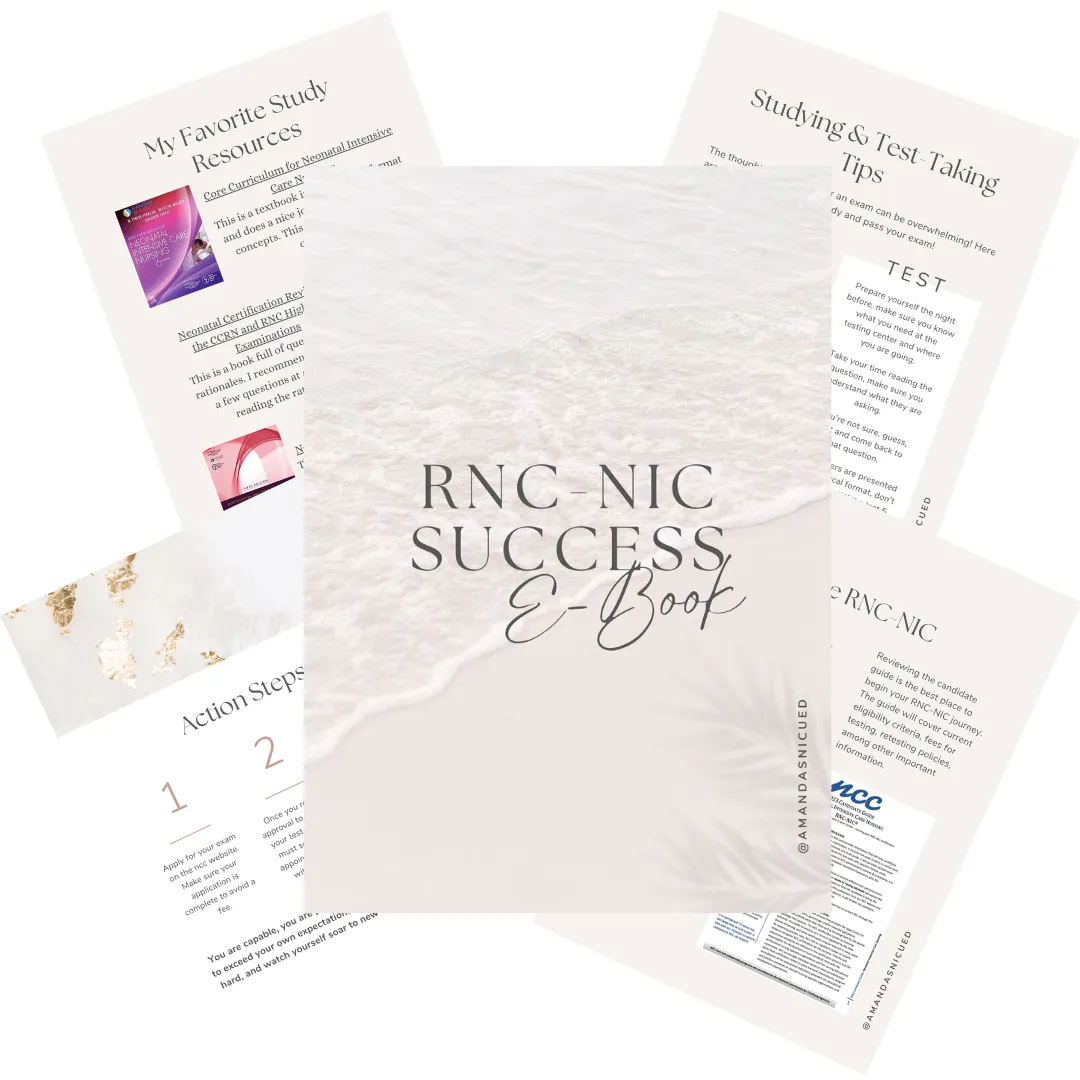
Grab my FREE E-Book packed with essential study and test-taking strategies for the RNC-NIC.
In the E-Book I give you the resources you need including the link to access the candidate guide, several types of books to study from, some of my favorite strategies, an outline of the content you should review, and a blank calendar for you to make your study plan!
Frequently Asked Questions About the RNC-NIC exam

What is the RNC-NIC?
The RNC-NIC is a competency-based exam that tests the specialty knowledge of nurses in the United States & Canada who care for critically ill newborns and their families.
The RNC-NICU is a nationally recognized certification that recognizes the registered nurse for their specialty knowledge and skill.
Who can take the RNC-NIC exam?
Nurses can take this exam after a minimum of two years experience in the NICU caring for critically ill newborns and their families.

Which books should I use?
I'm glad you asked! There are many excellent books to help you prepare for the RNC-NIC, I gathered ande describe each of them for you in my FREE e-book.
Is there a course to help me study?
Yes! Many hospitals host their own certification course and there are a few online courses. See my RNC-NIC test taking tips E Book for more information
What happens if I don't pass the exam?
If you don't pass the exam on your first try you can try again after 90 days. You will have to reapply after 90 days and pay a retest fee. There is no limit to the number of times you can take the exam (however a candidate can only sit for the exam twice per year).
Can I make more money if I take the RNC-NIC exam and get certified?
Yes! Many hospitals provide a raise or a bonus for nurses with specialty certifications. Hospitals also typically hire at a higher base salary when nurses have a certification.

Find me @amandasnicued on these channels or Email me
hey nurses don't miss out
© Copyright 2024. AmandasNICUEd. All rights reserved. | Terms & Conditions | Privacy Policy Contact: [email protected]