Developmental Care
Happy December!
As the holidays get closer, I always find myself slowing down a little; just enough to feel that mix of gratitude and reflection that only comes at the end of a long year. I’m so thankful for my family, my friends, my career… and for this community of nurses who show up every day for the tiniest patients. December always feels like a soft pause, a moment to look back at everything that’s happened and everything we’ve had the privilege to be part of.
This year has been big in so many ways. I launched projects I’d been dreaming about for years, met incredible nurses from around the world, and poured my heart into creating resources that support your growth. One of the most meaningful moments happened just a few days ago: a nurse messaged me after receiving her Certification Review Book and said it was “an incredible resource.” That simple message stopped me in my tracks. After working on that book for so long (wondering if people would like it) hearing that it truly helped someone made every late night and every revision completely worth it.
And of course, because my brain can’t help but dream big, I’m already thinking about how to make the next batch even better. Helping nurses learn, lead, and feel confident is the entire reason I do what I do. When you grow, babies get better care. That ripple effect is everything.
As I’m reflecting on this year, I’m also thinking about how much growth happens in the NICU every single day, especially when we support babies with intentional developmental care. So in this month’s newsletter, I wanted to dig into the major developmental care models shaping the way we nurture premature infants, protect their brains, and partner with families.
Check Out My NICU Review Book!
🌱 Developmental Care in the NICU: Evidence-Based Strategies for Neuroprotection
In this moment, somewhere in your NICU, a 26-weeker is trying to sleep while monitors beep, overhead lights glare, and rounds approach. Their brain, expecting the muffled, rhythmic world of the womb, is instead processing a cascade of sensory input they won't be ready for until 40 weeks!
Every day in the NICU, we help babies do one of the most extraordinary things a human can do: finish gestation outside of the womb. Developmental care isn't a "nice to have", it's the framework that protects the brain, stabilizes physiology, and builds relationships when infants are at their most vulnerable.
Drawing from decades of research, several key models have shaped how we approach developmental support. In this newsletter, we'll break down what these models teach us, why they matter, and how we, as NICU nurses, can translate them into powerful daily practice.
🌟 Why Developmental Care Matters
Preterm infants experience stressors their bodies and brains were never designed for. Developmental care models give us an evidence-based roadmap to:
Protect the developing brain through sensory modulation
Support physiologic stability via stress reduction
Improve feeding, growth, and sleep patterns
Strengthen family bonding and parental confidence
Reduce length of stay and long-term neurodevelopmental challenges
Key Point:It's more than comfort. It's neuroprotection.
🧠 The Major Models of Developmental Care
1. NIDCAP (Newborn Individualized Developmental Care & Assessment Program)
What it is:The most extensively studied model focusing on reading infant behavioral cues to individualize care timing and approach.
Key evidence:
Improved autonomic and motor regulation at term-equivalent age
Enhanced sleep-wake cycling and state organization
Stronger neurodevelopmental scores at 18-24 months corrected age
Bedside Pearl:Every interaction is an assessment opportunity. Watch for approach vs. avoidance signals before, during, and after care.
2. Kangaroo Mother Care (KMC)
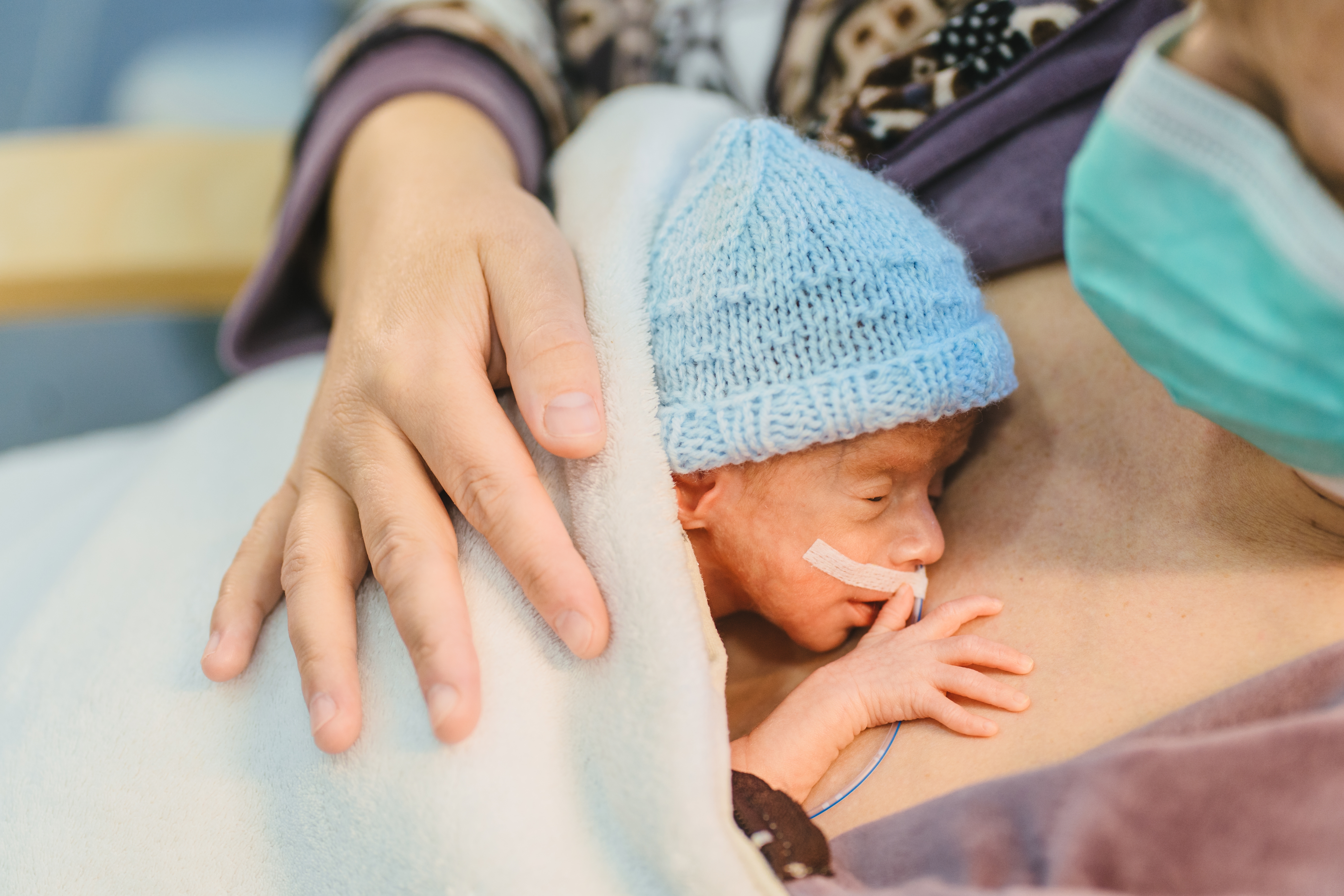
What it is:Direct skin-to-skin contact between parent and infant, ideally for extended periods.
Key evidence:
36% reduction in mortality for infants <2000g
Improved cardiorespiratory stability within 10 minutes of initiation
Higher exclusive breastfeeding rates at discharge (3x more likely)
Bedside Pearl:Even intubated infants can safely kangaroo with proper positioning and team support. Start conversations early about "when," not "if."
3. Family-Centered & Family-Integrated Care Models
What it is:Parents as primary caregivers with nurses as mentors, not gatekeepers.
Key evidence:
25% reduction in nosocomial infections!
Decreased parental stress scores
Shorter length of stay (average 3-5 days)
Bedside Pearl:Replace "I need to do cares" with "Would you like to do cares together?" Parents aren't visitors, they're essential caregivers.
4. Environmental Modification
What it is:Systematic control of sensory input to support neurodevelopment.
Key evidence:
Sound levels <45 dB improve sleep efficiency by 30%
Cycled lighting supports earlier circadian rhythm development
Single-room design associated with improved neurobehavioral scores
Bedside Pearl:Measure your unit's baseline. Most NICUs average 55-75 dB—equivalent to constant traffic noise. Small changes (voice modulation, quiet times) create measurable differences.
5. The SENSE Program (Supporting and Enhancing NICU Sensory Experiences)
The SENSE Program is an evidence-based framework that provides structured, developmentally appropriate sensory exposures for preterm infants. It outlines daily goals for touch, auditory input, visual experiences, movement, smell, and taste which is adjusted by gestational age and medical stability.
Why it works:Preterm infants miss critical in-utero sensory experiences and are often exposed to unpredictable NICU stimuli. SENSE ensures babies receive the right sensory input at the right time, supporting brain organization, state regulation, bonding, and feeding readiness.
Nursing takeaway: SENSE gives the bedside team and families a clear, research-guided roadmap for meaningful sensory interactions each day, making developmental care more intentional and consistent.
✨ Putting Evidence Into Practice: Your Action Plan
🚦 Quick Reference: Reading Behavioral Cues
STOP SIGNS (stress/avoidance):
Finger splay or salute
Color changes (mottled, dusky, pale)
Vital sign instability
Gaze aversion or eye squeeze
Tongue protrusion
Hiccups, yawns, sneezes
GO SIGNS (self-regulation/approach):
Hands to face or mouth
Smooth, rhythmic movements
Stable color and vitals
Alert gaze or visual tracking
Relaxed tone
Hand clasp or foot bracing
📋 Shift-Specific Strategies
Day Shift:
Protect sleep in between care times (even better, provide infant driven care times!)
Bundle non-urgent cares with necessary interventions
Facilitate at least one kangaroo session
Coach parents through hands-on care
Night Shift:
Maintain light levels <10 lux except during cares
Cluster assessments to preserve sleep cycles
Position for deep sleep (flexion, boundaries, midline)
Document sleep-wake patterns for rounds
During Procedures:
Offer two-person support: one for procedure, one for comfort
Provide boundaries (hands, blanket rolls, developmental aides) for bracing
Use breast milk or sucrose + pacifier 2 minutes before painful stimuli
Allow recovery time before returning to baseline positioning

🌙 Sleep-Wake States: Your Guide to Reading Infant Readiness
Sleep isn't just "quiet time" in the NICU. During sleep, synapses form, memories consolidate, growth hormone surges, and the autonomic nervous system resets. When we protect sleep cycles and recognize state transitions, we directly impact neurodevelopmental outcomes.
💤 The Six Behavioral States: What to See, What to Do
⚪ State 1: Deep Sleep (Non-REM)
What You'll See:
Regular, rhythmic respirations (no variability)
Eyes closed, no movement beneath lids
Minimal to no body movement
Relaxed facial muscles, neutral expression
Decreased response to stimulation
Lower baseline heart rate
Clinical Significance:This is peak neuroplasticity time, growth hormone release, protein synthesis, and cellular repair occur here. Disruption can impair weight gain and healing.
Your Response:
Hands off unless medically urgent
Delay routine cares by 20-30 minutes if possible
If care is essential, provide deep pressure touch before procedural touch
⚪ State 2: Light/Active Sleep (REM)
What You'll See:
Irregular respirations with periodic breathing
Rapid eye movements under closed lids
Brief facial movements (smiles, frowns, grimaces)
Intermittent startles or jerky movements
Occasional sucking movements
Higher heart rate variability
Clinical Significance: 60-80% of preterm sleep is REM which is critical for visual development, learning, and sensory processing. This is when the brain "practices" motor patterns and processes the day's stimuli.
Your Response:
Maintain current positioning
If startles increase, provide boundaries (hand containment, nesting)
Avoid interpreting movements as "readiness" for interaction
Wait for state change before initiating cares
🟡 State 3: Drowsy (Transitional)
What You'll See:
Eyes opening and closing slowly ("heavy lids")
Variable muscle tone (alternating floppy/tense)
Intermittent body movements
Delayed responses to stimuli
Yawning, stretching
Glazed or unfocused gaze when eyes open
Clinical Significance:This bi-directional state can move toward sleep or wakefulness. Your actions here determine which direction.
Your Response:
To promote sleep:Dim lights, provide containment, minimize stimulation
To promote waking:Gentle voice, slow position change, wait for further arousal
Perfect time to prepare parents: "She's starting to wake up…in a few minutes she might be ready to see you"
🟢 State 4: Quiet Alert
What You'll See:
Eyes wide open, bright, focused
Minimal body movement (stillness)
Regular respirations
Attentive facial expression
Visual tracking capability
Responsive to voices/faces
Stable vital signs
Clinical Significance:This is the optimal learning state, only 10% of preterm infant's day. Every minute counts for feeding, bonding, and developmental intervention.
Your Response:
Priority activities:Feeding attempts, parent interaction, developmental assessment
Maintain face-to-face distance of 8-10 inches
Use this state for teaching parents infant cues
Increasing duration of quiet alert time indicates maturation
🔵 State 5: Active Alert (Pre-cry)
What You'll See:
Increased body movements (squirming, thrashing)
Facial tension or concern
Irregular respirations
Fussiness without crying
Difficulty focusing gaze
Beginning color changes
Early stress signals (finger splay, arching)
Clinical Significance:The infant is approaching threshold. Quick intervention can prevent escalation to crying.
Your Response:
Immediate co-regulation: containment, pacifier, positioning
Reduce all stimulation (lights, noise, handling)
Try "facilitated tucking", firm boundaries at head, feet, and sides
If feeding, pause and support before continuing
🔴 State 6: Crying
What You'll See:
Intense, rhythmic crying
Whole body involvement
Elevated heart rate (>160-180)
Irregular, rapid respirations
Color changes (red face, mottling)
Difficulty accepting consolation
High energy expenditure
Clinical Significance:Crying burns calories premature infants can't spare. Prolonged crying increases ICP and decreases oxygenation.
Your Response:
Two-person support if needed
Sequential interventions (don't overwhelm):
Containment first
Then pacifier
Then gentle rhythmic movement
Consider pain/hunger/discomfort causes
I love this video from Synapse Care Solutions and Mary Coughlin on infant sleep! Click Here
🎯 Start Tomorrow: One Immediate Change
The 10-Second Pause: Before touching any infant, stop for 10 seconds. Observe their current state. Are they in deep sleep? Light sleep? Quiet alert? Match your interaction to their readiness. This single practice can reduce stress responses by 40%.
💡 Overcoming Common Barriers
"My baby is too sick for developmental care"→ The sicker the infant, the more crucial neuroprotection becomes. Modify approaches, don't eliminate them.
"We don't have time for individualized care"→ Cue-based care often means LESS handling, not more. Reading avoidance signals prevents destabilization events that require more intervention.
"Parents seem overwhelmed already"→ Start with observation. "Notice how she relaxes when you talk?" builds confidence before hands-on involvement.
📊 Measuring Your Impact
As a CNS, I'm always thinking about how we know we made improvements? What can we measure? Work with your team to track these quick metrics to demonstrate developmental care effectiveness:
Days to full oral feeds
Daily weight gain patterns
Parent participation in cares
Unplanned interventions during protected sleep times
🌼 The Future of Developmental Care
Research is advancing toward:
Biomarker-guided neuroprotection protocols
EEG-based sleep protection algorithms
Parent-infant synchrony measurement tools
Automated cue-detection systems
But technology will never replace the nurse's trained eye and therapeutic touch. We remain the bridge between science and humanity.
💬 Your Next Steps
Developmental care isn't perfection, it's intention. Every protected nap, every supported parent, every recognized cue literally shapes the neonatal brain. The science is clear: what NICU nurses do every shift changes outcomes that last a lifetime.
This week's challenge:Choose one infant. Document their behavioral cues for three consecutive cares. Share what you notice with their parents. Watch how awareness transforms your practice, and theirs.
📚 Must-Read Resources for Deeper Learning
Start Here:
Als, H. (1986). A synactive model of neonatal behavioral organization.Physical & Occupational Therapy in Pediatrics, 6(3–4), 3–53.
Coughlin, M. (2014).Trauma-informed care in the NICU. Springer Publishing.
Craig, J. W., et al. (2015). Recommendations for involving the family in developmental care.Journal of Perinatology, 35, S5–S8.
If this blog sparked your curiosity, imagine what you could do with a full, structured roadmap to neonatal physiology, pathophysiology, and exam success. My Online Certification Review Course breaks everything down simply, clearly, and with the “why” behind every concept.

Stay Curious,
Amanda
© 2025 This content is for educational purposes and should complement, not replace, your unit's policies and procedures.
Missed my other newsletters? Click here to read them!
References:
Als, H. (1986). A synactive model of neonatal behavioral organization: Framework for the assessment of neurobehavioral development in the premature infant and for support of infants and parents in the neonatal intensive care environment.Physical & Occupational Therapy in Pediatrics, 6(3–4), 3–53.
Boundy, E. O., et al. (2016). Kangaroo mother care and neonatal outcomes: A meta-analysis.Pediatrics, 137(1), e20152238.
Coughlin, M. (2014).Trauma-informed care in the NICU: Evidence-based practice guidelines for neonatal clinicians. Springer Publishing.
Craig, J. W., et al. (2015). Recommendations for involving the family in developmental care of the NICU baby.Journal of Perinatology, 35, S5–S8.
Feldman, R., Rosenthal, Z., & Eidelman, A. I. (2014). Maternal–preterm skin-to-skin contact enhances child physiologic organization and cognitive control across the first 10 years of life.Biological Psychiatry, 75(1), 56–64.
Graven, S. N., & Browne, J. V. (2008). Auditory development in the fetus and infant.Newborn and Infant Nursing Reviews, 8(4), 187–193.
Graven, S. N., & Browne, J. V. (2008). Sleep and brain development: The critical role of sleep in fetal and early neonatal development.Newborn and Infant Nursing Reviews, 8(4), 173–179.
Harding, C., Law, J., & Pring, T. (2006). The use of cue-based feeding strategies in premature infants: A systematic review.Journal of Perinatology, 26(4), 237–243.
Kleberg, A., et al. (2008). Lower stress responses after NIDCAP care during eye screening examinations for ROP.Early Human Development, 84(9), 619–625.
Lester, B. M., et al. (2014). Single-family room care and neurobehavioral and medical outcomes in preterm infants.Pediatrics, 134(4), 754–760.
O'Brien, K., et al. (2013). Effectiveness of family integrated care in neonatal intensive care units on infant and parent outcomes: A multicentre, multinational, cluster-randomised controlled trial.The Lancet Child & Adolescent Health, 7(9), 699–710.
Pineda, R., et al. (2017). Neonatal intensive care unit environmental influences on the neonate's neurodevelopment.Journal of Perinatology, 37(3), 315–320.
Schneider, J., et al. (2018). Impact of skin-to-skin contact on preterm brain development: A randomized controlled trial.Pediatrics, 142(4), e20174445.
Symington, A., & Pinelli, J. (2004). Developmental care for promoting development and preventing morbidity in preterm infants.Cochrane Database of Systematic Reviews, 2004(1), CD001814.
Westrup, B. (2014). Family-centered developmental care for very preterm infants.Current Opinion in Pediatrics, 26(2), 146–151.


